
Digital investigations are crucial today, encompassing diverse skills like evidence seizure and analysis, as highlighted in a complimentary eBook offer ending soon!
Computer forensics, a critical discipline in the digital age, focuses on the identification, preservation, analysis, and documentation of digital evidence. It’s a broad field, requiring specialized skills to seize and examine data from various sources. As highlighted by current offers, gaining expertise through resources like complimentary eBooks is invaluable. This field bridges the gap between technology and the legal system, ensuring digital evidence is admissible in court. Understanding its core principles is paramount for investigators tackling increasingly complex cybercrimes and digital disputes. It’s a constantly evolving area.

The Scope of Digital Forensics
Digital forensics extends far beyond traditional computer investigations. It now encompasses mobile devices – smartphones and tablets – due to their prevalence and data storage capabilities. Cloud forensics is also a rapidly expanding area, addressing data residing on remote servers. The scope includes network forensics, analyzing network traffic for malicious activity, and even malware analysis to understand threats. As investigations become more complex, the field demands expertise in diverse technologies. Resources, like offered eBooks, provide crucial insights into this broadening landscape, vital for modern investigators.
Core Principles of Computer Forensics
Fundamental to digital investigations are core principles ensuring integrity and legal defensibility. Preservation of Evidence is paramount, maintaining data in its original state. A meticulous Chain of Custody documents every handler and action, preventing tampering accusations. Crucially, all evidence must meet standards for Admissibility of Evidence in court. These principles guide investigators, demanding rigorous methodology. Understanding these concepts, often detailed in specialized guides and training, is essential for successful and legally sound forensic outcomes.
Preservation of Evidence
Maintaining data integrity is the cornerstone of digital forensics. Preservation of Evidence demands preventing any alteration or damage to the original data source. This involves utilizing write-blockers during imaging to avoid accidental modification. Proper handling, secure storage, and detailed documentation are vital. Investigators must meticulously record every step taken to ensure a clear audit trail. Failing to adequately preserve evidence can jeopardize the entire investigation, rendering findings inadmissible in legal proceedings, highlighting its critical importance.

Chain of Custody
Establishing a meticulous Chain of Custody is paramount in digital forensics. This detailed record documents the seizure, control, transfer, analysis, and disposition of digital evidence. Each person handling the evidence must be identified, and the date/time of transfer logged. Any deviation from this process can compromise the evidence’s integrity and admissibility in court. A robust chain of custody demonstrates the evidence hasn’t been tampered with, ensuring its reliability and bolstering the credibility of the entire investigation.
Admissibility of Evidence
Ensuring digital evidence is admissible in court requires strict adherence to legal standards and forensic best practices. Maintaining a proper chain of custody is critical, alongside demonstrating the evidence’s integrity and authenticity. Evidence must be relevant, reliable, and obtained legally, avoiding any violation of privacy rights. Thorough documentation of all procedures – acquisition, analysis, and preservation – is essential. Failure to meet these criteria can lead to evidence being excluded, potentially jeopardizing the entire case’s outcome.
Legal Framework and Regulations
Computer forensics operates within a complex legal landscape, varying significantly by jurisdiction. Laws like the Electronic Communications Privacy Act (ECPA) and the Computer Fraud and Abuse Act (CFAA) in the US define permissible data access and seizure. International regulations, such as GDPR, impact data handling during investigations. Investigators must understand search warrants, privacy laws, and rules regarding evidence admissibility. Compliance with these frameworks is paramount to avoid legal challenges and ensure the integrity of the investigation, protecting both the process and the findings.
Types of Computer Forensics Investigations
Computer forensics investigations span a broad spectrum of cases. Criminal investigations involve cybercrime, fraud, and data breaches, often requiring collaboration with law enforcement. Civil investigations address disputes like intellectual property theft or contract breaches, focusing on evidence for litigation. Internal corporate investigations examine employee misconduct, data leaks, or policy violations. Each type demands tailored approaches, considering the specific legal context, evidence requirements, and objectives of the inquiry, ensuring appropriate data handling and analysis.
Criminal Investigations
Criminal investigations utilizing computer forensics address a wide array of illegal activities. These include cybercrimes such as hacking, malware distribution, and online fraud. Digital evidence is crucial in cases involving data breaches, identity theft, and financial crimes. Investigators meticulously analyze digital devices to uncover evidence of intent, actions, and communications related to the alleged offense. Successful prosecution often hinges on the proper collection, preservation, and analysis of this digital evidence, adhering to strict legal standards.
Civil Investigations
Civil investigations leverage computer forensics to uncover evidence in non-criminal disputes. These cases often involve intellectual property theft, contract breaches, and corporate espionage. Forensic experts analyze digital data to establish facts, identify responsible parties, and quantify damages. Evidence gathered can include emails, documents, and financial records. The goal is to provide a clear and objective reconstruction of events, supporting legal arguments and facilitating settlements. Maintaining a strict chain of custody is paramount for admissibility in court proceedings.
Internal Corporate Investigations
Internal corporate investigations utilize computer forensics to address misconduct within an organization. These inquiries may involve fraud, harassment, data breaches, or violations of company policy. Forensic experts discreetly collect and analyze digital evidence from employee devices and network systems. The focus is on identifying the scope of the issue, determining responsible individuals, and mitigating further damage. Maintaining confidentiality and adhering to legal guidelines are crucial. Findings inform disciplinary actions, policy improvements, and legal strategies, protecting the company’s reputation and assets.
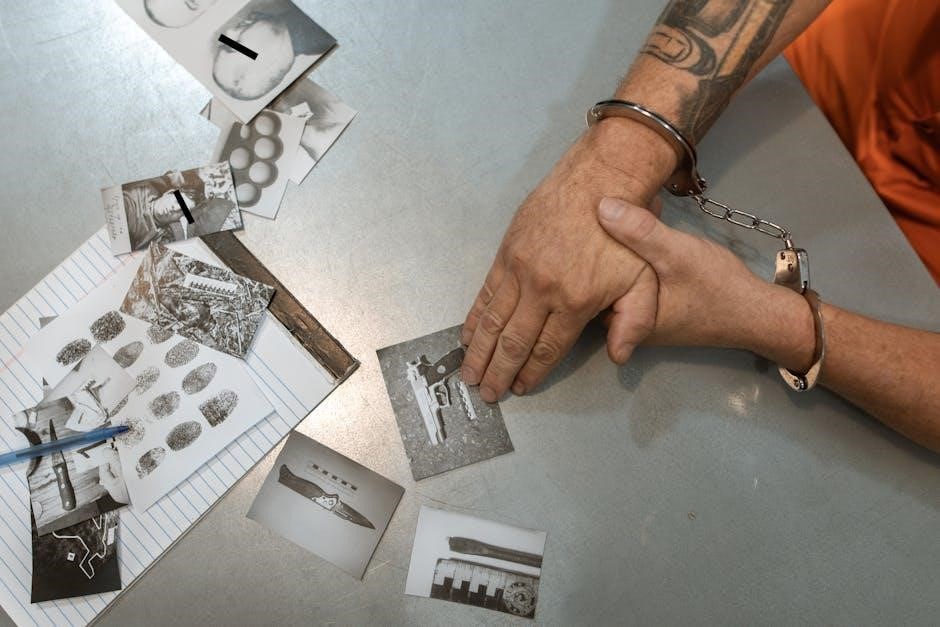
The Computer Forensics Investigation Process
The investigation process is a systematic approach to uncovering digital evidence. It begins with identification – defining the scope and objectives. Next, collection & preservation ensures evidence integrity, following strict protocols. Examination & analysis involves detailed scrutiny using specialized tools. Crucially, every step requires thorough documentation & reporting, creating a clear audit trail. This structured methodology guarantees legally sound and reliable results, vital for successful outcomes in any digital investigation, whether criminal, civil, or internal.
Identification
Initial identification is paramount, defining the investigation’s scope and objectives. This phase involves recognizing potential evidence sources – computers, mobile devices, networks, or cloud storage. Determining the type of incident, like a data breach or malware infection, guides the process. Crucially, legal considerations and authorization are established early on. A clear understanding of what happened, when, and where is essential for focusing subsequent collection and analysis efforts, ensuring a targeted and efficient investigation.

Collection & Preservation
Proper collection and preservation are vital to maintain evidence integrity. This involves utilizing forensically sound methods to acquire data, preventing alteration or damage. Imaging tools, like FTK Imager or EnCase, create bit-by-bit copies of storage devices. Maintaining a strict chain of custody – documenting every handler and action – is critical. Original evidence must remain untouched. Secure storage and meticulous documentation ensure admissibility in court, safeguarding the investigation’s credibility and legal standing throughout the entire process.

Examination & Analysis
Thorough examination and analysis transform collected data into actionable intelligence. This phase employs specialized tools – hex editors for low-level inspection, and potentially password cracking tools when access is restricted. Investigators search for relevant artifacts, reconstruct timelines, and identify patterns. Malware analysis plays a key role in understanding malicious activity. The goal is to uncover hidden evidence, establish facts, and build a coherent narrative. Detailed documentation of each analytical step is paramount for defensibility and accurate reporting.
Documentation & Reporting
Meticulous documentation and reporting are cornerstones of a successful investigation. Every action, from evidence collection to analytical steps, must be precisely recorded. The final report should clearly present findings, methodologies, and conclusions in a concise and understandable manner. It must support the evidence presented and withstand scrutiny in legal proceedings. Accurate reporting ensures the admissibility of evidence and facilitates informed decision-making. A well-structured report is crucial for presenting findings effectively and maintaining the integrity of the investigation.
Key Tools and Technologies in Computer Forensics
A robust toolkit is essential for effective digital investigations. Imaging tools like EnCase and FTK Imager create forensic copies of data. Hex editors allow for low-level data examination. Password cracking tools aid in accessing encrypted information. These technologies, alongside specialized software, enable investigators to recover deleted files, analyze file systems, and identify malicious code. Utilizing these tools requires specialized training and a thorough understanding of their capabilities to ensure accurate and reliable results throughout the investigation process.
Imaging Tools (e.g., EnCase, FTK Imager)
Forensic imaging tools, such as EnCase and FTK Imager, are foundational in digital investigations. They create bit-by-bit copies, or images, of storage devices – ensuring the original evidence remains unaltered. These images are then analyzed, preserving the integrity of the source data. Imaging tools support various file systems and storage media. Proper imaging is crucial for legal admissibility, providing a verifiable duplicate for examination and analysis, and maintaining a clear audit trail throughout the investigative process.
Hex Editors
Hex editors are essential tools for low-level data analysis in computer forensics. They allow investigators to view and modify the raw hexadecimal representation of files. This capability is vital for uncovering hidden data, identifying file headers, and analyzing file structures beyond what standard software reveals. Skilled examiners use hex editors to recover deleted files, examine malware code, and validate data integrity. Understanding hexadecimal notation and file formats is crucial for effective utilization of these powerful, yet complex, investigative instruments.
Password Cracking Tools
Password cracking tools are frequently employed in computer forensics to bypass or recover access to encrypted data. These tools utilize various techniques, including brute-force attacks, dictionary attacks, and rainbow tables, to decipher passwords protecting files, systems, or accounts. Ethical considerations are paramount; their use must adhere to legal frameworks and investigation scopes. Investigators leverage these tools to access crucial evidence locked behind password protection, ensuring proper documentation and justification for each attempt. Success depends on password complexity and available computing resources.
Data Acquisition Techniques
Data acquisition is a foundational step in computer forensics, demanding meticulous execution to preserve evidence integrity. Techniques range from creating forensic images – bit-by-bit copies of storage devices – using tools like FTK Imager and EnCase, to live acquisitions for volatile data. Proper handling prevents alteration or contamination. Logical acquisitions extract specific file systems or data types. Investigators must document every step, ensuring a defensible chain of custody. The chosen method depends on the investigation’s scope and the data’s nature, prioritizing accuracy and completeness.
File System Forensics
File system forensics involves analyzing how data is stored and retrieved on digital media. Different operating systems employ unique file systems – NTFS, FAT, and APFS being prominent examples. Each requires specialized knowledge for effective investigation. Understanding metadata, file allocation tables, and directory structures is crucial for recovering deleted files, uncovering hidden data, and reconstructing events. Investigators analyze timestamps, file signatures, and slack space to piece together a timeline of activity. Mastery of these techniques is vital for comprehensive digital investigations.
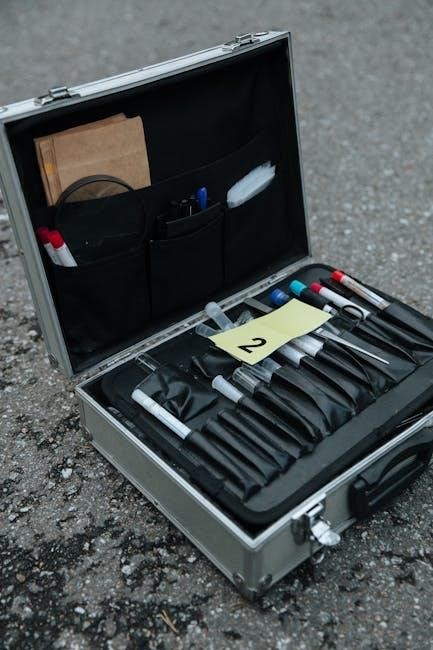
NTFS Forensics

NTFS (New Technology File System) forensics demands a deep understanding of its complex structure. Master File Table (MFT) analysis is paramount, as it contains metadata for every file and directory. Investigators examine MFT records for timestamps, attributes, and data pointers. Recovering deleted files relies on locating and reconstructing MFT entries. NTFS also features journaling, providing a record of file system changes. Analyzing these logs can reveal crucial information about system activity and potential malicious actions. Thorough NTFS forensics is essential for Windows-based investigations.

FAT Forensics
FAT (File Allocation Table) forensics, while seemingly simpler than NTFS, presents unique challenges. Investigators analyze the FAT to reconstruct file fragments and identify deleted data. Understanding cluster sizes and file fragmentation is crucial for successful recovery; Examining directory entries reveals file names, attributes, and timestamps. However, FAT’s lack of robust journaling makes timeline reconstruction more difficult. Deleted files often leave remnants in unallocated space, requiring careful carving techniques. Thorough FAT forensics is vital when investigating older systems or removable media.
APFS Forensics
APFS (Apple File System) forensics demands specialized tools and knowledge due to its complex structure. Unlike FAT, APFS utilizes copy-on-write metadata, making data recovery intricate. Investigators must understand APFS volumes, containers, and snapshots to accurately reconstruct events. Examining the APFS metadata reveals crucial information about file creation, modification, and deletion. Challenges include dealing with encryption and the system’s robust security features. Successful APFS forensics requires proficiency in Apple’s ecosystem and dedicated forensic software.
Network Forensics
Network forensics centers on capturing and analyzing network traffic to uncover evidence of security breaches or malicious activity. This involves examining packet captures (PCAPs), logs from firewalls and intrusion detection systems, and network device configurations. Investigators reconstruct network events, identify communication patterns, and pinpoint the source of attacks. Analyzing protocols like TCP/IP and HTTP is essential. Challenges include dealing with encrypted traffic and large volumes of data. Effective network forensics requires specialized tools and a deep understanding of networking principles.
Mobile Forensics vs. Computer Forensics
Mobile forensics distinguishes itself from traditional computer forensics due to the unique characteristics of mobile devices. Smartphones and tablets, being portable, often contain sensitive personal data and utilize different file systems and operating systems. Data extraction methods vary significantly, requiring specialized tools to bypass security features. Mobile devices also present challenges related to cloud storage and rapidly evolving technology. While both fields share core principles, mobile forensics demands a focused skillset to handle the complexities of these compact, yet data-rich, devices.
Cloud Forensics
Cloud forensics presents unique challenges due to the distributed and scalable nature of cloud environments. Data resides on remote servers, often across multiple jurisdictions, complicating evidence collection and preservation. Traditional forensic techniques are often insufficient, requiring investigators to collaborate with cloud service providers. Legal considerations, such as data privacy regulations and search warrants, are paramount. Investigators must understand cloud architectures and data storage models to effectively analyze evidence and establish a clear chain of custody in these dynamic systems.
Malware Analysis in Forensics
Malware analysis is a critical component of many computer forensics investigations, helping to determine the scope and impact of an incident. Forensic investigators employ static and dynamic analysis techniques to understand malware functionality, identify its origin, and uncover its communication patterns. This process involves disassembling code, monitoring system behavior, and utilizing sandboxing environments. Understanding malware’s capabilities is essential for reconstructing events, attributing attacks, and providing evidence for legal proceedings, ultimately aiding in incident response and prevention.
Timeline Analysis
Timeline analysis reconstructs events by chronologically ordering digital artifacts. This crucial forensic technique correlates data from various sources – file system timestamps, event logs, registry entries, and network activity – to establish a sequence of actions. Investigators utilize specialized tools to visualize these timelines, identifying critical events and potential anomalies. A well-constructed timeline provides a clear narrative of what happened, when, and by whom, supporting investigations and revealing hidden relationships between seemingly unrelated pieces of digital evidence.
Registry Analysis
Registry analysis delves into the Windows Registry, a hierarchical database storing configuration settings and usage information. Forensic investigators examine registry keys and values to uncover user activity, installed software, system modifications, and evidence of malware. This analysis can reveal recently opened files, connected devices, and user login details, even after deletion from the file system. Specialized tools aid in parsing and interpreting the complex registry structure, providing valuable insights into system behavior and potential malicious actions.
Email Forensics
Email forensics involves the recovery and analysis of email messages, headers, and associated metadata to uncover crucial evidence. Investigators examine email servers, client applications, and webmail interfaces to locate and preserve relevant communications. Analysis focuses on sender/recipient information, timestamps, message content, and attachments, revealing communication patterns and potential intent. Recovered deleted emails and tracing email origins are key aspects, often requiring specialized tools to overcome anti-forensic techniques and reconstruct fragmented data.
Anti-Forensic Techniques and Countermeasures
Anti-forensic techniques are methods used to conceal digital crimes and obstruct investigations. These include data wiping, steganography (hiding data within files), encryption, and altering timestamps. Countermeasures involve proactive security measures like robust logging, intrusion detection systems, and data loss prevention strategies. Forensic investigators must recognize these techniques and employ advanced methods to uncover hidden or altered evidence, utilizing specialized tools to bypass encryption and recover deleted data, ensuring a thorough and accurate investigation.
Reporting and Presentation of Findings
Comprehensive reporting is vital in computer forensics, detailing the entire investigation process – from evidence identification to analysis and conclusions. Reports must be clear, concise, and technically accurate, avoiding jargon where possible. Presentation of findings often requires expert testimony in legal settings, demanding the ability to explain complex technical details to non-technical audiences. Visual aids, like timelines and data visualizations, enhance understanding. Maintaining objectivity and adhering to legal standards are paramount throughout this crucial phase.
Emerging Trends in Computer Forensics
The digital landscape is constantly evolving, driving new trends in computer forensics. Cloud forensics is increasingly important as data migrates to cloud platforms, demanding specialized skills. Artificial intelligence (AI) and machine learning are being utilized for automated analysis and pattern recognition. IoT device investigations present unique challenges due to their diversity and security vulnerabilities. Ransomware attacks fuel the need for rapid incident response and data recovery expertise. Staying ahead requires continuous learning and adaptation.
Ethical Considerations in Digital Investigations
Maintaining integrity is paramount in digital investigations. Investigators must adhere to strict ethical guidelines, respecting privacy and legal boundaries. Data handling requires careful consideration to avoid unauthorized access or disclosure. Objectivity is crucial; biases can compromise the investigation’s validity. Transparency in methods and findings builds trust. Professional conduct demands responsible use of tools and techniques. Upholding these principles ensures fairness, accountability, and the admissibility of evidence in legal proceedings.
Training and Certification in Computer Forensics
Formal training is essential for aspiring computer forensics professionals. Certification programs, like those offered by organizations specializing in digital investigations, validate skills and knowledge. Courses cover topics from data acquisition to malware analysis. Continuous learning is vital due to the evolving nature of technology and forensic techniques. Industry-recognized credentials enhance credibility and career prospects. Practical experience, alongside theoretical understanding, is highly valued by employers seeking qualified investigators.

Future of Computer Forensics
The field is rapidly evolving, driven by emerging technologies like artificial intelligence and machine learning. Automation will likely play a larger role in data analysis, accelerating investigations. Cloud forensics will become increasingly important as more data resides in the cloud. IoT device security and forensics present new challenges. Quantum computing could potentially break current encryption methods, requiring new forensic approaches. Proactive threat hunting and anti-forensic technique countermeasures will be crucial for staying ahead.