
Shotgun shell reloading offers cost savings, customization, and a deeper understanding of ballistics; a shotgun reloading manual is essential for safe and effective practices.
Reloading allows shooters to tailor loads to their specific firearms and hunting or sporting needs, optimizing performance and consistency.
This practice involves disassembling spent shotgun shells, cleaning the components, and reassembling them with new primers, powder, and shot.
Proper technique, adherence to published data, and meticulous attention to detail are paramount for safe and successful shotgun shell reloading.
Understanding the components and the reloading process empowers shooters to create ammunition that meets their exact requirements, enhancing their shooting experience.
Safety Precautions
Reloading shotgun shells demands unwavering adherence to safety protocols. Always consult a reputable shotgun reloading manual and meticulously follow published load data – never exceed recommended powder charges.
Wear appropriate eye protection during all stages of the reloading process to shield against flying debris. A well-ventilated workspace is crucial, as some reloading components emit fumes.
Never smoke or have open flames near reloading components or finished ammunition. Store powders and primers in a cool, dry location, away from heat sources and potential ignition points.
Handle primers with extreme care; they are sensitive to impact and friction. Always double-check your work, verifying powder type and charge weight before seating a primer. Inspect each case for cracks or damage before reloading.
Treat every shell as if it is loaded, and never point a firearm at anything you do not intend to shoot. Safe reloading practices are not merely suggestions; they are essential for your well-being and the safety of others.

Essential Equipment for Reloading
Beginning shotgun shell reloading requires specific equipment, detailed within any comprehensive shotgun reloading manual. A sturdy reloading press is fundamental, providing the mechanical advantage for various operations.
Shell holders, sized to fit specific shotgun gauges, securely hold the shell during reloading. A powder scale, accurate to 0.1 grains, is vital for precise powder charges. Powder measures dispense consistent powder volumes.
Priming tools seat new primers into the primer pockets. Wadding trays organize wads, and a shot scale measures the correct shot weight. A crimping tool finishes the shell, securing the wad and shot column.
Calipers are useful for measuring overall cartridge length. Case cleaning tools remove residue, and a tumbler polishes brass cases. Safety glasses and a well-lit workspace complete the essential setup.
Investing in quality equipment ensures accuracy, efficiency, and, most importantly, safety throughout the reloading process.

Understanding Shotgun Shell Components
Shotgun reloading manuals detail each component: the hull, primer, powder, wad, and shot; understanding their functions is crucial for safe and effective reloading practices.
Shotgun Shell Cases (Hulls)
Shotgun reloading manuals emphasize the importance of hull selection and condition. Hulls, traditionally made of paper or plastic, contain all other components during firing and reloading.
Plastic hulls are more durable and reusable than paper hulls, offering a cost-effective option for reloaders. However, repeated reloading can cause plastic hulls to weaken and potentially fail;
Inspect hulls carefully for cracks, splits, or other damage before each reload. Discard any damaged hulls to prevent dangerous malfunctions. Different hull types are designed for specific gauges and loads, so always use hulls compatible with your intended recipe.
Hull length and base type (straight or folded) also influence performance and compatibility with reloading equipment. Shotgun reloading manuals provide detailed information on hull specifications and recommendations.
Wads: Types and Functions
Shotgun reloading manuals detail the crucial role of wads in shell performance. Wads are positioned between the powder charge and the shot column, providing a gas seal and cushioning the shot during acceleration.
Various wad types exist, including fiber wads (traditional, for lower-pressure loads) and plastic wads (more common, for higher pressures and improved sealing). Plastic wads often feature a shot cup to further protect the shot and improve pattern density.
Wad selection depends on the hull type, powder charge, and desired performance characteristics. Shotgun reloading manuals provide specific wad recommendations for each load recipe.
Proper wad compression is essential for a tight gas seal and consistent performance. Incorrect wad seating can lead to reduced velocity, poor patterns, and even dangerous pressure buildup. Always consult your manual!
Shot: Materials and Sizes
Shotgun reloading manuals emphasize the importance of selecting the correct shot material and size for the intended application. Shot is available in various materials, including lead, steel, bismuth, and tungsten – each with different densities and ballistic properties.
Shot size is designated by a number; larger numbers indicate smaller pellets. Common sizes range from #8 (small for quail) to #4 (larger for turkey). The appropriate size depends on the target and range.
Shotgun reloading manuals provide charts correlating shot size to effective range and target type. Consistent shot size and roundness are crucial for tight patterns and accurate shooting.
Steel shot requires different wad designs and powder charges than lead shot due to its lower density. Always consult your manual for specific load data when using steel or other non-toxic shot alternatives.
Powder: Types and Burn Rates
Shotgun reloading manuals detail the critical role of powder selection, emphasizing that using the wrong powder can be dangerous. Smokeless powders are categorized by their burn rate – how quickly they combust – influencing velocity and pressure.
Powders are generally classified as fast, medium, or slow burning. Faster powders are typically used for lighter loads and shorter ranges, while slower powders generate higher velocities for longer shots.
Shotgun reloading manuals provide specific powder recommendations and load data for each caliber and shot combination. Never substitute powders without consulting a reliable source.
Accurate powder measurement is paramount; digital scales are recommended for precision. Always double-check powder charges before crimping the shell, adhering strictly to published load data to ensure safe operation.
Primers: Selection and Handling
Shotgun reloading manuals emphasize the importance of primer selection, as they initiate the combustion process. Primers are categorized as standard or magnum, influencing ignition sensitivity and pressure levels.
Standard primers are suitable for most loads, while magnum primers are recommended for slower-burning powders or colder temperatures, ensuring reliable ignition. Always consult your shotgun reloading manual for specific recommendations.
Primer handling requires extreme caution. Avoid dropping or subjecting primers to impact, as they contain sensitive explosive compounds. Store primers in a cool, dry place, away from heat and flame.
When seating primers, use a dedicated primer seating tool and apply consistent, gentle pressure. Never reuse fired primers, as they may be damaged or unreliable, potentially leading to misfires or dangerous conditions.

The Reloading Process: Step-by-Step
A shotgun reloading manual guides you through cleaning cases, seating primers, charging powder, adding wads and shot, and finally, crimping the shell for safe use.
Case Cleaning and Inspection
A shotgun reloading manual emphasizes that thorough case cleaning is the first crucial step. Spent hulls accumulate residue impacting reloading; remove it using a tumbler with walnut shells or a dedicated case cleaner.
Inspect each case meticulously for cracks, splits, or excessive headspacing, as these indicate potential failures during firing. Discard any damaged hulls immediately – safety is paramount.
Pay close attention to the primer pocket; ensure it’s free of old primer residue. A stuck primer can cause issues during reseating. A specialized primer pocket cleaner assists with this task.
Visually examine the case mouth for any deformation or fraying. Consistent case length is also vital; use a case trimmer if necessary to ensure uniformity. Proper cleaning and inspection guarantee reliable performance.
Following your shotgun reloading manual’s guidance ensures longevity and safety in your reloading process, preventing dangerous malfunctions.
Primer Pocket Preparation
A shotgun reloading manual stresses the importance of proper primer pocket preparation. After cleaning, the pocket must be free of old primer compound to ensure reliable ignition of the new primer.
Use a dedicated primer pocket cleaner – a small brush or specialized tool – to remove all traces of residue. Avoid abrasive cleaners that could damage the pocket’s dimensions.
Some reloaders lightly chamfer the primer pocket opening to facilitate easier primer insertion. This is optional but can be beneficial, especially with stubborn hulls.
Ensure the primer pocket is dry before proceeding. Moisture can interfere with primer seating and potentially cause a misfire. A clean, dry pocket is essential for consistent ignition.
Consult your shotgun reloading manual for specific recommendations regarding primer pocket preparation for different hull types. Proper preparation guarantees safe and reliable performance.
Powder Charging Techniques
A shotgun reloading manual emphasizes precise powder charging as critical for safety and accuracy. Never deviate from published load data; exceeding maximum charges can cause dangerous pressure build-up.
Powder measures – either volumetric or by weight – are essential tools. Weighing powder with a digital scale is the most accurate method, offering consistent charges.
Volumetric measures require careful calibration and consistent powder density. Always “trickle” the final amount to achieve the exact charge weight specified in your manual.
Double-check each charge before proceeding. A small error can have significant consequences. Consistent technique and meticulous attention to detail are paramount.
Consult your shotgun reloading manual for specific powder recommendations and charge weights for your chosen components and shell type. Safety is non-negotiable.
Wad Selection and Installation
A shotgun reloading manual details the importance of selecting the correct wad for your shell, powder, and shot combination. Wads create a gas seal, protect the shot column, and ensure proper crimping.
Wad types include fiber, plastic, and specialized wads for specific loads. The manual will specify the appropriate wad for each recipe. Incorrect wad selection can lead to poor patterns or dangerous pressures.
Proper wad installation is crucial. Ensure the wad is seated correctly on the powder column, forming a tight seal. Some wads require lubrication for optimal performance.
Follow the shotgun reloading manual’s instructions precisely regarding wad orientation and seating depth. Consistent wad installation contributes to consistent performance.
Always verify the wad is compatible with your chosen powder and shot size before proceeding. Careful attention to detail during wad selection and installation is vital for safe and effective reloading.
Shot Measurement and Loading
A shotgun reloading manual emphasizes precise shot measurement for consistent patterns and velocities. Utilize a calibrated shot scale to weigh the correct amount of shot for your chosen load.
Avoid relying on volume measurements, as shot density can vary. Carefully pour the measured shot into the shell case, ensuring it rests evenly on top of the wad. Avoid spillage, as this affects the load weight.
The manual will specify the maximum shot charge for each load recipe. Exceeding this limit can create dangerously high pressures. Consistent shot weight is paramount for accuracy.
Some reloaders use shot cards to aid in pouring and prevent settling during handling. Always double-check the shot weight against the shotgun reloading manual’s specifications.
Proper shot loading ensures optimal performance and safety. Accurate measurement and careful placement are essential steps in the reloading process.
Crimping the Shell
A shotgun reloading manual details the crucial step of crimping, securing the shot, wad, and powder column within the shell case. Crimping forms a tight seal, maintaining consistent pressure and preventing shot leakage during handling and firing.
Utilize a crimping die designed for your specific shell gauge. Adjust the die carefully, following the manual’s instructions, to achieve a uniform and secure crimp. Over-crimping can increase pressure, while under-crimping risks shot spillage.
Inspect each crimped shell for consistency. The crimp should be even around the circumference, without sharp edges or creases. A properly crimped shell feels firm and secure.
The shotgun reloading manual will specify the appropriate crimp depth for each load. Consistent crimping is vital for reliable ignition and optimal pattern density.
Proper crimping ensures safe and effective ammunition. Careful adjustment and inspection are essential for achieving a quality finished product.

Specific Calibers and Gauges
A shotgun reloading manual provides tailored data for 12, 20, and .410 bore gauges, detailing powder charges, wad types, and crimp specifications for optimal performance.
12 Gauge Reloading Data
A shotgun reloading manual is crucial for 12 gauge, offering extensive data for various loads. Typical data includes powder charges ranging from 17 to 32 grains, depending on the powder type and desired velocity.
Wad selection is critical; data specifies appropriate wad types for different shot charges and powder loads, ensuring proper gas sealing and consistent patterns. Shot charges commonly range from 1 to 1 ½ ounces, with recommended shot sizes varying from #4 to #8 for different applications.
Data tables detail velocities achieved with specific combinations of components, allowing reloaders to fine-tune their loads. Always consult multiple sources and start with minimum loads, working up gradually while monitoring for pressure signs. Remember, a shotgun reloading manual is your guide to safe and effective 12 gauge reloading.
20 Gauge Reloading Data
A shotgun reloading manual provides essential 20 gauge data, typically featuring powder charges between 13 and 26 grains, contingent on powder selection and intended velocity. Careful wad selection is paramount, with data specifying appropriate wads for varying shot weights and powder loads to ensure optimal performance.
Common shot charges for 20 gauge range from ¾ to 1 ¼ ounces, with recommended shot sizes spanning from #6 to #8, tailored for diverse hunting and sporting scenarios. Reloading data tables illustrate expected velocities achieved with specific component combinations.
Always prioritize safety by referencing multiple shotgun reloading manual sources and initiating loads at the minimum recommended charge, incrementally increasing while vigilantly observing for pressure indicators.
.410 Bore Reloading Data
A shotgun reloading manual details .410 bore data, typically utilizing lighter powder charges—ranging from 6 to 14 grains—due to the smaller case capacity. Precise powder selection is crucial, as .410 bore loads are sensitive to variations. Data specifies appropriate wads, often cushion-based, to accommodate the limited space and ensure proper crimping.
Common shot charges for the .410 bore generally fall between ½ and ¾ ounces, with recommended shot sizes ranging from #6 to #8 for small game and sporting clays. Reloading data tables provide expected velocities for different component combinations.
Always consult multiple shotgun reloading manual sources and begin with minimum loads, carefully monitoring for pressure signs while incrementally increasing charges.
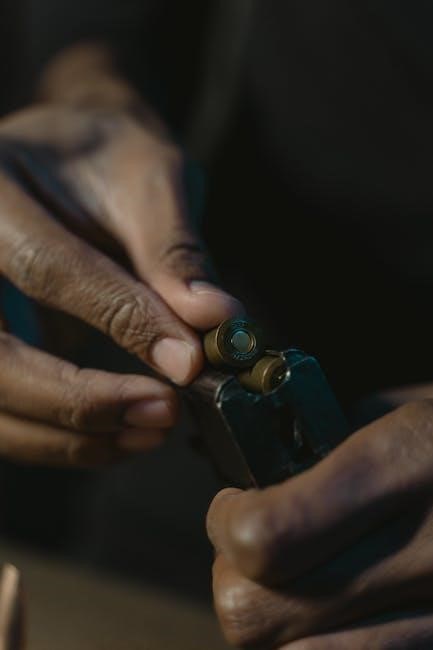
Advanced Reloading Techniques
A shotgun reloading manual unlocks techniques like velocity adjustments, specialized wad designs, and pressure mapping for optimal performance; precision is key for consistent results.
Reloading for Skeet and Trap
A shotgun reloading manual is crucial for skeet and trap, demanding precise patterns and minimal recoil. These disciplines prioritize consistent, predictable performance at relatively close ranges, unlike waterfowl or upland game.
Load development focuses on lighter target loads, typically using 7 ½ or 8 shot sizes, and moderate powder charges. Wads specifically designed for skeet and trap offer improved shot cushioning and consistent patterns.
Experienced reloaders often experiment with different powder types and wad columns to fine-tune their loads for their specific gun and shooting style. Careful attention to primer selection and consistent powder charges are vital for achieving optimal results.
Consulting a shotgun reloading manual provides established starting points and safe load data, allowing shooters to incrementally adjust their recipes for enhanced accuracy and reduced felt recoil, maximizing their scores.
Reloading for Waterfowl Hunting
A shotgun reloading manual is essential for waterfowl, where ethical harvests demand sufficient energy and pattern density at longer ranges. Waterfowl loads typically utilize larger shot sizes – typically #2, #3, or #4 – and heavier powder charges to deliver adequate penetration and stopping power.
Steel shot is now the standard for many waterfowl hunts, requiring specialized wads designed to protect barrels and maintain consistent patterns. Reloading for steel necessitates careful adherence to published load data, as steel is less dense than lead.
Experienced reloaders often experiment with different wad materials and powder types to optimize patterns and minimize shot deformation. A shotgun reloading manual provides crucial guidance on safe load densities and maximum pressures.
Understanding choke constriction and its impact on pattern performance is vital for maximizing the effectiveness of waterfowl reloads, ensuring clean and ethical shots.
Reloading for Upland Game Hunting
A shotgun reloading manual is invaluable for upland game, where varied terrain and bird sizes necessitate versatile loads. Upland hunting often calls for smaller shot sizes – #6, #7.5, or #8 – to maximize pattern density and increase the likelihood of hitting fast-moving targets.
Reloading allows upland hunters to tailor loads to specific game birds, adjusting shot size and powder charge to match the bird’s size and shooting distance. Lighter loads can be effective for grouse and quail, while heavier loads are better suited for pheasant and chukar.
Selecting the appropriate wad is crucial for consistent patterns and optimal performance. A shotgun reloading manual provides detailed information on wad selection and compatibility with different powders and shot types.
Experimentation with different components can help upland hunters achieve the ideal balance of recoil, pattern, and effectiveness.
Troubleshooting Common Reloading Issues
A shotgun reloading manual aids in diagnosing issues like squib loads, inconsistent charges, or poor crimps; careful attention to detail prevents problems.
Squib Loads
A shotgun reloading manual emphasizes the severe danger of squib loads – cartridges with insufficient propellant to properly eject the shot column. These present a significant hazard, potentially obstructing the barrel and causing damage or injury with subsequent shots.
Identifying potential causes, such as incorrect powder charges or double-basing errors, is crucial. Reloading manuals provide precise powder weight guidelines for each caliber and load combination, preventing underpowered rounds.
If a squib load is suspected, immediately cease firing and carefully inspect the barrel. Manuals advise against attempting to fire another shell; instead, use a cleaning rod to safely dislodge the obstruction. Never risk a barrel rupture by continuing to shoot.
Consistent powder measurement and meticulous adherence to published data, as detailed in a shotgun reloading manual, are the best defenses against squib loads.
Inconsistent Powder Charges

A shotgun reloading manual stresses the critical importance of uniform powder charges for consistent velocity, accuracy, and, most importantly, safety. Variations in powder weight can lead to unpredictable performance and potentially dangerous pressure spikes.
Reloading manuals recommend using a high-quality powder scale, regularly calibrated, and employing precise powder-measuring techniques like trickling or utilizing automatic powder dispensers. Double-checking each charge is paramount.
Factors contributing to inconsistency include static electricity affecting powder flow, improper scale leveling, and inaccurate powder dispensing. Manuals often detail methods to mitigate these issues.
Significant deviations from published load data, even seemingly minor, can compromise the integrity of the shell and create hazardous conditions. Always consult a shotgun reloading manual and prioritize accuracy in powder charging.
Poor Crimps
A shotgun reloading manual emphasizes the crucial role of a proper crimp in securing the wad and shot column within the shell. An inadequate crimp can lead to shot leakage during firing, drastically reducing pattern density and effective range.
Reloading manuals detail various crimping techniques and the importance of using the correct crimping die for the specific hull type. Consistent crimp depth and uniformity are essential for reliable performance.
Issues causing poor crimps include incorrect die adjustment, worn or damaged dies, and hull deformation. Manuals often provide troubleshooting steps for addressing these problems.
Visually inspecting each crimped shell for consistency and tightness is vital. A well-formed crimp should exhibit a uniform, secure seal. Always refer to a shotgun reloading manual for specific crimping guidelines.

Resources and Further Learning
Shotgun reloading manuals, online forums, and component suppliers provide invaluable knowledge; continuous learning enhances safety and precision in reloading practices.
Recommended Shotgun Reloading Manuals
Shotgun reloading manuals are the cornerstone of safe and accurate reloading, providing crucial data and guidance. Several reputable manuals are highly recommended for both beginners and experienced reloaders.
Speer Reloading Manuals are widely respected for their comprehensive data, covering a broad range of calibers and components, including detailed shotgun reloading information. Hodgdon Reloading Data Center offers extensive online resources and downloadable manuals, frequently updated with the latest powder formulations.
Lyman’s Reloading Handbook is another classic resource, known for its detailed explanations of the reloading process and extensive load data. Alliant Powder provides specific load data for their powders, often available online or in printed manuals. Always cross-reference data between multiple sources and prioritize safety above all else when selecting a shotgun reloading manual.
Remember to choose a manual that corresponds to the specific components you intend to use, ensuring accurate and reliable results.
Online Forums and Communities
Shotgun shell reloading benefits greatly from the collective knowledge found in online forums and communities. These platforms offer a space for reloaders to share experiences, ask questions, and learn from each other’s successes and mistakes.
Shotgunworld.com is a popular forum dedicated to all things shotguns, including a robust reloading section. Reloadersnest.com provides a wealth of information, load data, and a supportive community. The High Road forum also features active discussions on shotgun reloading techniques and component selection.
These communities are invaluable resources for troubleshooting issues, finding load recipes, and staying up-to-date on the latest reloading practices. Remember to always verify information with a reputable shotgun reloading manual and prioritize safety when following advice from online sources.
Engaging with these communities can significantly enhance your reloading journey.
Reloading Component Suppliers
Sourcing high-quality components is crucial for safe and accurate shotgun shell reloading. Several reputable suppliers cater specifically to reloaders, offering a wide range of primers, powders, wads, shots, and cases.
MidwayUSA is a well-known supplier with an extensive inventory and competitive pricing. Brownells offers a comprehensive selection of reloading tools and components, alongside detailed technical information. Hodgdon Powder Company directly sells their powders and provides valuable load data.
Bass Pro Shops and Cabela’s also carry reloading supplies, offering convenience for those who prefer in-store shopping. Always consult a shotgun reloading manual to ensure compatibility between components and adhere to recommended load data. Prioritize suppliers with a strong reputation for quality and customer service.
Reliable components are the foundation of successful reloading.