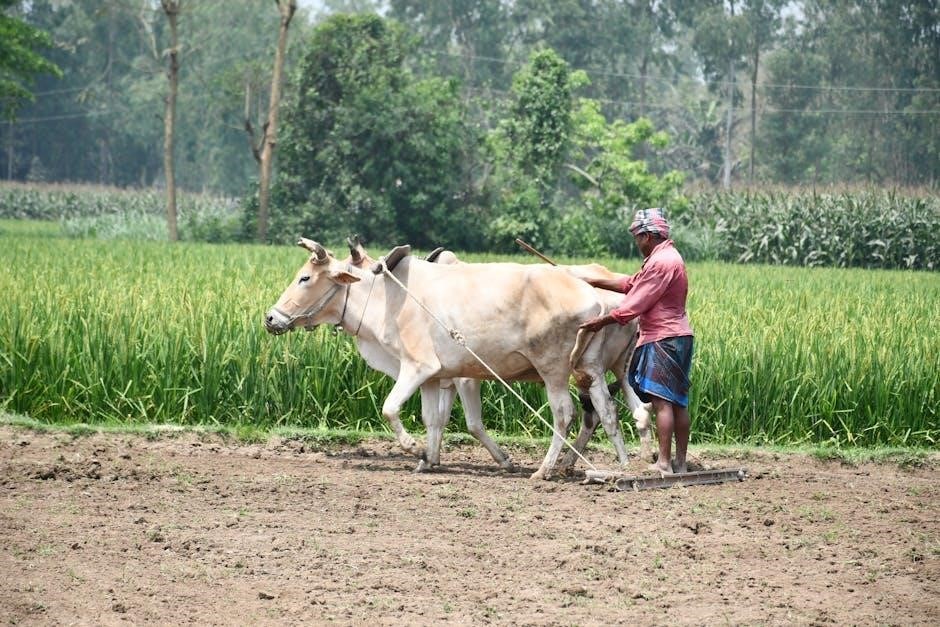
Manual Plow: A Historical Overview
Throughout history, the manual plow represents a foundational tool, deeply intertwined with the development of settled agriculture and the rise of civilizations globally.
Early Origins and Development
The earliest iterations of the manual plow emerged from necessity, driven by humankind’s transition towards settled agricultural practices. Archaeological evidence suggests rudimentary forms existed in Mesopotamia and Egypt, predating written records. These initial designs, often simple digging sticks or forked branches, represented a significant leap from nomadic hunter-gatherer lifestyles.
Early development focused on increasing efficiency in soil preparation for planting. The evolution wasn’t rapid; it was a gradual refinement based on observation and practical experience, shaping the foundations of food production and societal structures.
The Precursors to the Moldboard Plow
Before the moldboard, simpler plow types like the ard and scratch plows prepared fields, though with limitations in soil turning and efficiency.
Ard Plow – The Ancient Beginning
The ard plow, originating in Mesopotamia around 6000 BCE, marks the earliest known form of tillage. Constructed primarily from wood, often with a stone or bronze tip, it didn’t invert the soil like later designs. Instead, it scratched the surface, creating furrows for planting seeds.
Archaeological evidence suggests its use spread to Europe and Asia, adapting to local soil conditions. While simple, the ard plow was crucial for increasing agricultural productivity, enabling early settlements and supporting population growth. It represented a significant step towards more controlled food production.
Scratch Plows and Their Limitations
Scratch plows, successors to the ard, continued the practice of surface scratching rather than full soil inversion. Predominantly wooden, these implements were common across various ancient cultures, including those in Europe, Asia, and parts of the Americas.
However, their shallow cultivation depth limited their effectiveness, particularly in heavier or clay-rich soils. Repeated use could lead to soil compaction, reducing aeration and hindering root growth. Consequently, yields remained relatively low, necessitating frequent fallowing to restore soil fertility.
Evolution of Plow Design
Plow design dramatically evolved over millennia, transitioning from simple scratch plows to sophisticated moldboard plows, driven by advancements in metallurgy and agricultural needs.
The Moldboard Plow: A Revolutionary Change
The moldboard plow marked a pivotal shift in agricultural technology, fundamentally altering how land was prepared for cultivation. Unlike earlier scratch plows that merely scored the surface, the moldboard design incorporated a curved surface – the moldboard – to lift, turn, and invert the soil.
This action buried weeds and crop residue, enriching the soil and improving aeration. The moldboard’s efficiency significantly increased crop yields, enabling farmers to cultivate larger areas with less labor. This innovation spurred agricultural productivity and supported growing populations, becoming a cornerstone of settled farming practices across diverse regions.
Improvements in Metalworking and Plow Construction
Advancements in metalworking were crucial for refining manual plow designs. Early plows utilized wood and stone, but the introduction of iron and then steel allowed for stronger, more durable, and effective plowshares and moldboards.
Improved forging techniques enabled the creation of sharper cutting edges and more precisely curved moldboards, enhancing soil inversion. These metallurgical improvements, coupled with evolving construction methods, resulted in plows capable of handling tougher soils and increasing agricultural output, driving further innovation in farming practices.
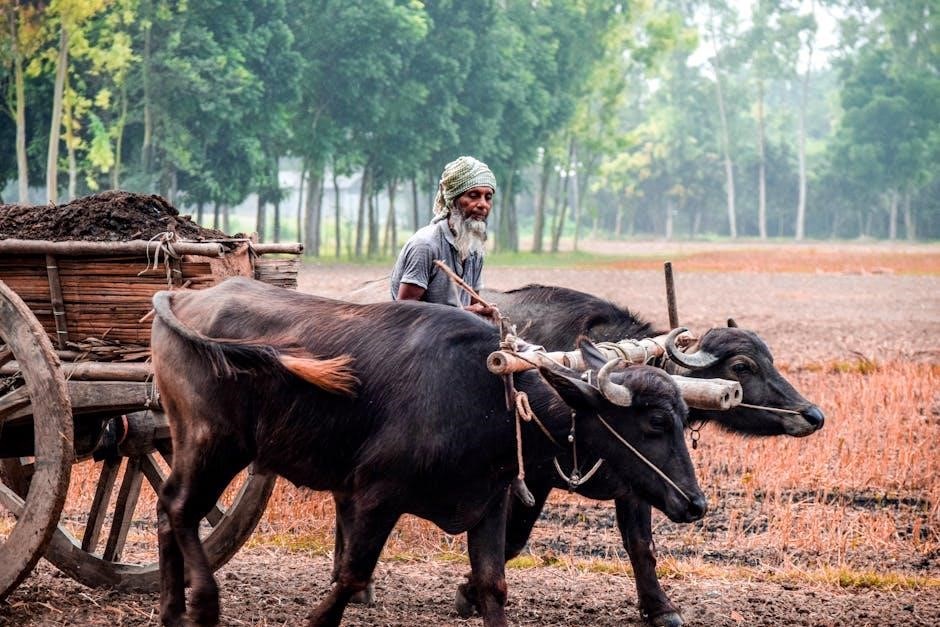
Regional Variations in Manual Plows
Across continents, manual plow designs adapted to local soil types, climates, and agricultural needs, resulting in diverse forms and construction techniques globally.
European Plow Designs (Northern vs. Southern)
Northern European plow designs, developed for heavier, wetter soils, typically featured larger, more robust frames and moldboards to effectively turn dense earth. These plows prioritized deep soil inversion. Conversely, Southern European plows, used in drier, lighter Mediterranean soils, were often smaller and simpler, focusing on surface cultivation and minimal soil disturbance.
Southern designs often lacked a fully developed moldboard, instead employing scratch plows or similar implements. This regional divergence reflects the varying agricultural challenges and traditions across the European continent, shaping distinct plow technologies over centuries.
Asian Plow Designs (China, India, and Southeast Asia)
Chinese plow designs historically emphasized lightness and maneuverability, often utilizing foot-powered plows or those pulled by humans, adapted for paddy rice cultivation. Indian plows, varying regionally, frequently incorporated wooden plows with iron tips, suited for diverse soil types. Southeast Asian plows often featured animal-drawn implements, though manual versions persisted.
A common thread was adaptation to intensive rice farming, with designs prioritizing water management and efficient soil preparation for transplanting. These regional variations demonstrate ingenious responses to local environmental conditions.
Plows in the Americas (Indigenous and Colonial)
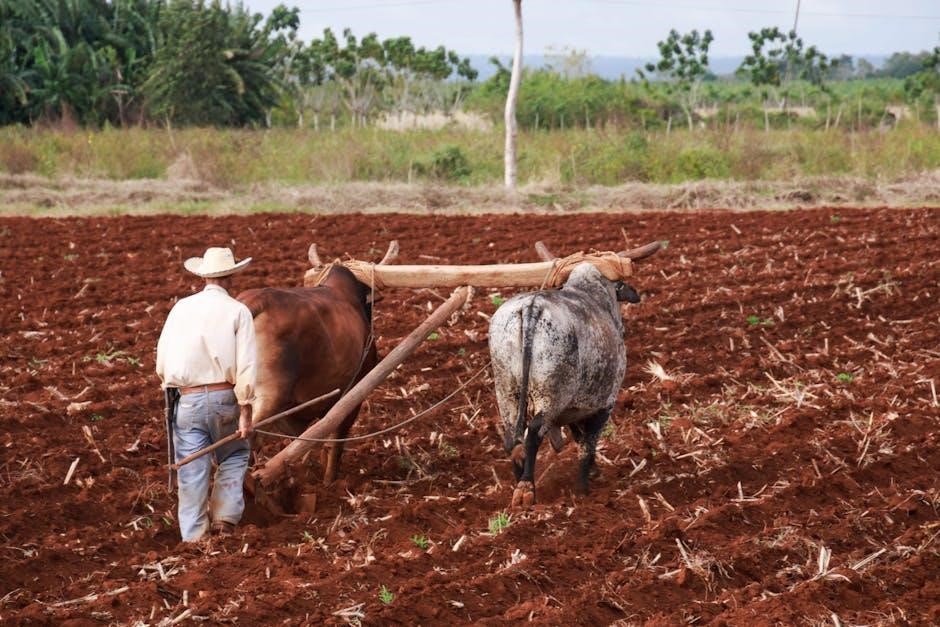
Prior to European contact, Indigenous peoples of the Americas primarily utilized digging sticks and hoes for soil preparation, adapting to diverse environments. The introduction of European plows during colonization dramatically altered agricultural practices, though initial adoption faced challenges due to soil conditions and available draft animals.
Colonial plows were often modified to suit New World terrains, blending European designs with Indigenous knowledge. This transition significantly impacted land use and agricultural productivity across the Americas.
Components of a Traditional Manual Plow
Essential parts include the plowshare for cutting, the moldboard for lifting and turning soil, and a landside for stability—all forming a cohesive unit.
The Plowshare: Cutting and Inverting the Soil
The plowshare, typically crafted from metal, represents the critical cutting edge of the manual plow, directly interacting with the earth to sever and lift the soil. Its design evolved over millennia, initially as simple pointed stones, then progressing to more refined metal forms.
This component’s primary function is to slice horizontally beneath the surface, initiating the inversion process. The shape and angle of the plowshare significantly impacted the efficiency of soil turning, influencing aeration and weed control. Variations existed based on soil type and regional agricultural practices, demonstrating a practical adaptation to diverse farming environments.
The Moldboard: Lifting and Turning the Soil
The moldboard, a curved surface positioned behind the plowshare, is essential for lifting and inverting the cut soil. This crucial component receives the severed furrow slice and smoothly turns it over, burying weeds and exposing fresh soil for planting.
Its shape and curvature were meticulously designed to ensure complete inversion, promoting aeration and nutrient distribution. Materials ranged from wood in early designs to cast iron and steel in later iterations, enhancing durability and efficiency. Regional variations in moldboard shape reflected differing soil conditions and agricultural needs.
The Landside: Maintaining Stability
The landside, situated on the side of the plow opposite the furrow, plays a vital role in maintaining stability during operation. It runs along the unplowed land, providing resistance against sideways movement and ensuring the plow travels in a straight line.
Constructed from durable materials like wood or metal, the landside prevents the plow from tilting or digging in too deeply. Its design was often adjusted based on soil type, with smoother surfaces for lighter soils and more robust designs for heavier, clay-rich ground.
The Handle and Frame: Control and Structure
The handle and frame constitute the control center and structural backbone of a manual plow. Typically crafted from wood, the handles allowed the farmer to grip, steer, and apply force to pull the plow through the soil.
The frame, connecting the various plow components, provided rigidity and maintained the correct alignment. Designs varied regionally, often incorporating features for adjusting depth or angle. Ergonomic considerations, though rudimentary, influenced handle shape for prolonged comfort during arduous fieldwork.
The Role of the Manual Plow in Agriculture
Historically, the manual plow dramatically increased crop yields and enabled settled agriculture, profoundly impacting food production and fostering significant social and economic changes.
Impact on Crop Yields and Food Production
The introduction of the manual plow marked a pivotal moment in agricultural history, fundamentally altering humanity’s capacity for food production. Prior to its widespread adoption, yields were limited by the laborious and inefficient methods of hoeing and digging with simple tools.
The plow’s ability to efficiently turn and aerate the soil, coupled with its capacity to bury weeds and prepare seedbeds, resulted in substantially increased harvests. This surplus in food production supported growing populations and allowed for the development of more complex societies, freeing individuals from the constant pursuit of sustenance.
The Plow and the Development of Settled Agriculture
Before the plow, agriculture was largely a nomadic or semi-nomadic endeavor, reliant on shifting cultivation and limited by soil fertility. The manual plow enabled farmers to cultivate the same land repeatedly, fostering a more permanent relationship with the land and leading to the establishment of settled communities.
This transition to settled agriculture was crucial for the development of villages, towns, and eventually, cities. It facilitated the accumulation of wealth, the specialization of labor, and the emergence of complex social structures – hallmarks of early civilizations.
Social and Economic Implications of Plow Technology
The introduction of the manual plow dramatically altered social hierarchies and economic systems. Increased agricultural productivity led to food surpluses, supporting larger populations and enabling the rise of non-agricultural specialists – artisans, priests, and rulers.
Land ownership became increasingly important, creating social stratification based on access to arable land. The plow’s labor demands also influenced social organization, potentially contributing to the development of cooperative labor practices and, unfortunately, forms of social control.
Manual Plows and the Rise of Civilizations
Early civilizations in Mesopotamia, Egypt, Greece, and Rome benefited immensely from plow technology, fostering agricultural advancements and supporting complex societal structures.
The Plow in Ancient Mesopotamia and Egypt
In Mesopotamia, as early as the 4th millennium BCE, evidence suggests the use of simple plows, initially constructed from wood, to prepare land for barley and wheat cultivation. These early implements dramatically increased agricultural output, supporting growing populations and the development of city-states.
Ancient Egypt also embraced plowing, depicted in artwork dating back to the Old Kingdom. Though initially reliant on manual labor, Egyptians utilized wooden plows to turn the fertile Nile silt, maximizing crop yields of wheat and flax. This agricultural surplus was crucial for sustaining the pharaohs’ ambitious building projects and complex administrative systems.
The Plow in Ancient Greece and Rome
Ancient Greece initially employed simple plows, often lightweight and suited for the rocky terrain. However, agricultural practices varied significantly across regions, with some areas relying more on hoeing and hand cultivation. Improvements came with heavier plows capable of deeper soil penetration.
The Roman Empire witnessed significant advancements in plow technology. Romans adopted and refined existing designs, incorporating iron plowshares for increased durability and efficiency. Virgil’s writings detail agricultural practices, highlighting the plow’s central role in Roman food production and the empire’s economic strength.
The Plow in Medieval Europe and Beyond
Medieval Europe saw the widespread adoption of the heavy plow, particularly the wheeled plow, revolutionizing agriculture. This innovation, coupled with the three-field system, dramatically increased crop yields and supported population growth. Regional variations emerged, adapting to diverse soil types and climates.
Beyond Europe, the plow’s influence spread through trade and cultural exchange. While adoption rates varied, the technology impacted agricultural practices in parts of Asia and North Africa, contributing to localized advancements in food production and societal development.
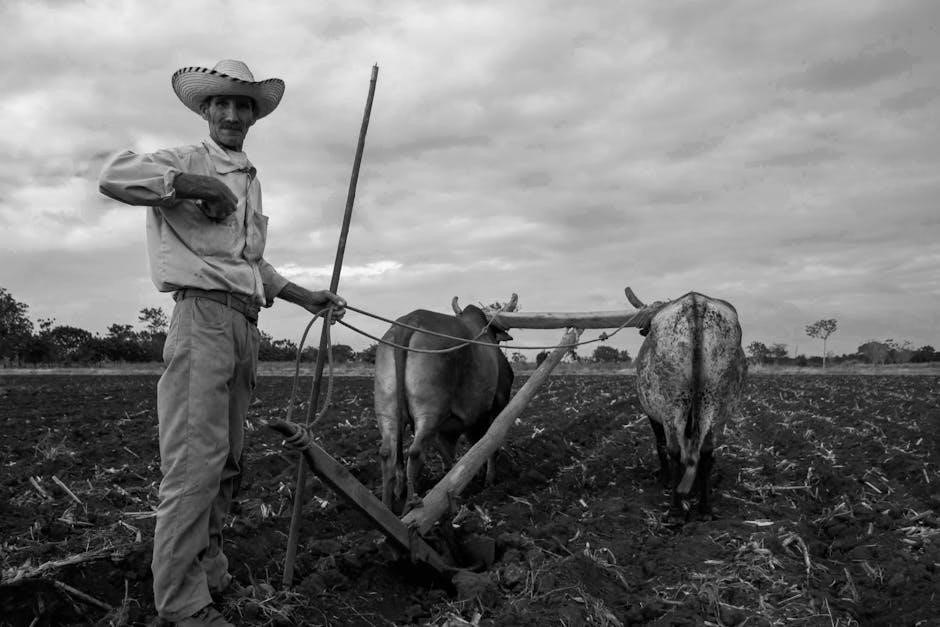
The Decline of the Manual Plow
The manual plow gradually lost prominence with the introduction of animal-drawn plows and, later, mechanized agriculture, offering increased efficiency and scale.
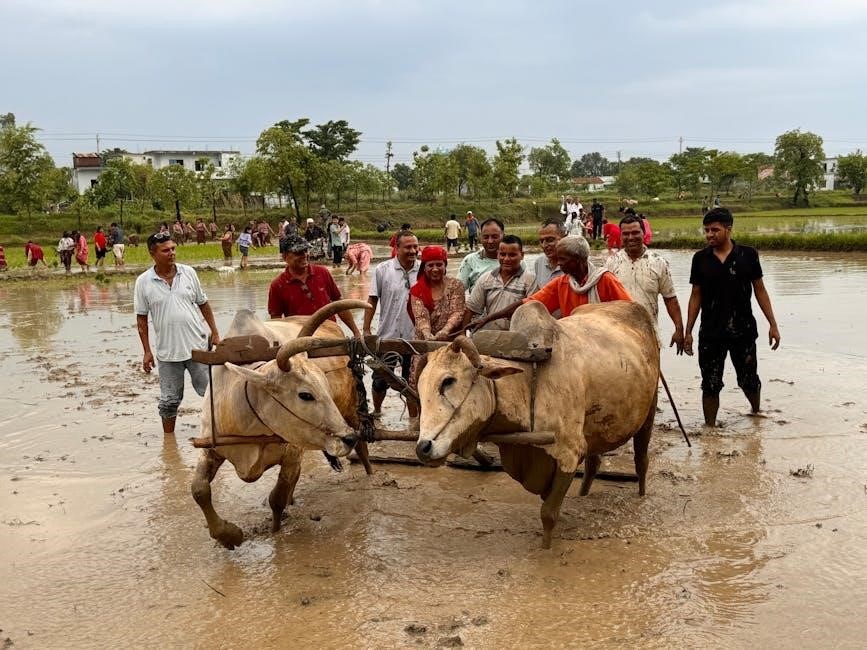
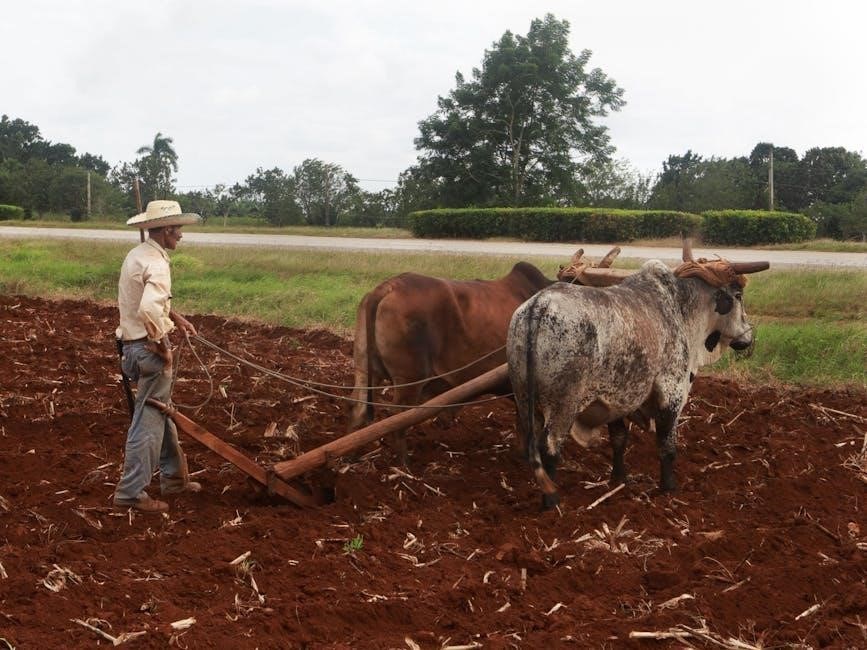
The shift from human-powered manual plows to those drawn by oxen, horses, or other animals marked a significant turning point in agricultural history. This innovation dramatically increased the area of land a single farmer could cultivate, boosting crop yields and supporting larger populations.
Animal traction reduced the immense physical labor required for plowing, freeing up human resources for other tasks. Early animal-drawn plows often retained design elements from their manual predecessors, evolving over time to optimize performance with animal power. This transition wasn’t immediate, with manual plows continuing in use alongside animal-powered versions for centuries.
The Rise of Mechanized Agriculture
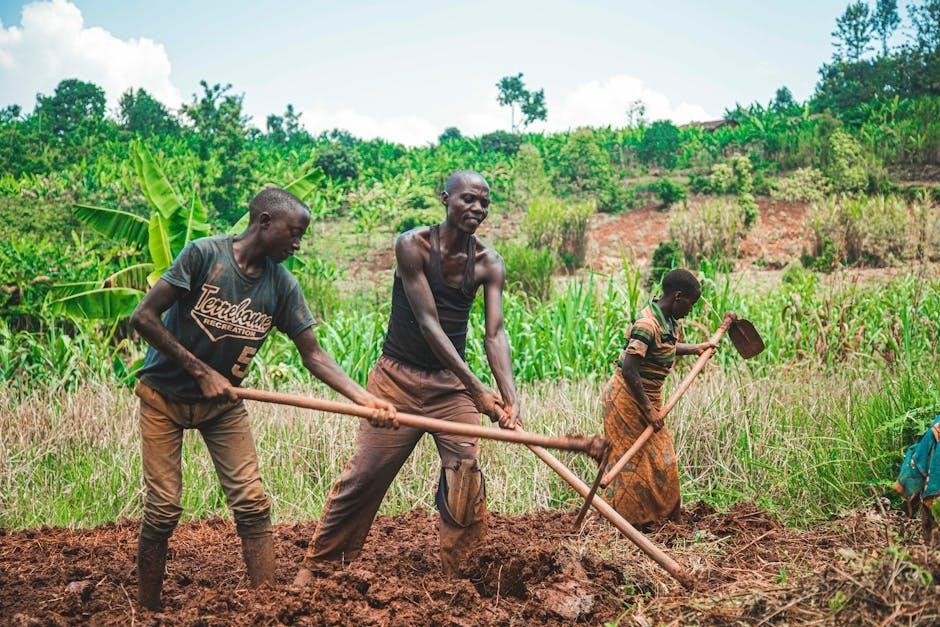
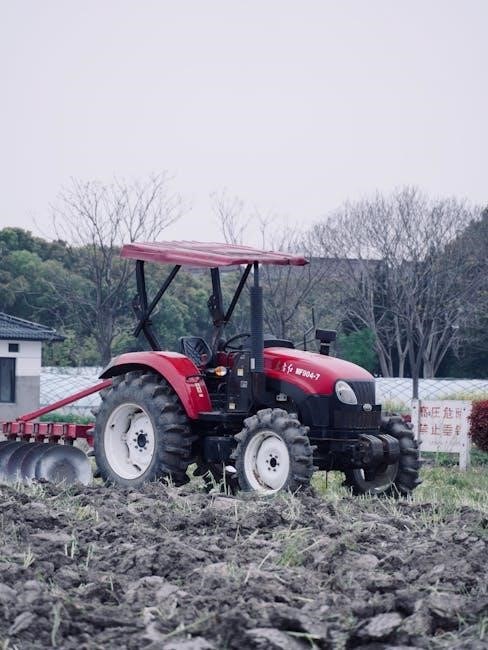
The advent of mechanized agriculture in the 19th and 20th centuries, beginning with steam-powered and later internal combustion engine tractors, ultimately led to the widespread abandonment of both manual and animal-drawn plows. These machines offered exponentially greater efficiency, capable of tilling vast areas of land in a fraction of the time.
This technological leap dramatically altered farming practices, reducing labor needs and increasing agricultural output. While the manual plow held historical significance, its practicality diminished in the face of mechanized alternatives, relegating it largely to historical reenactment and niche applications.
Modern Revivals and Preservation Efforts
Currently, renewed interest exists in manual plows through historical farms, sustainable agriculture, and a re-evaluation of traditional farming techniques for ecological benefits.
Historical Reenactment and Living History Farms
Living history farms and historical reenactments play a crucial role in demonstrating the practical application of manual plows across different eras and cultures. These immersive experiences allow visitors to witness firsthand the physical demands and skill required for soil preparation using these traditional tools.
Demonstrations often showcase various plow designs, highlighting regional adaptations and improvements over time. Participants gain a deeper understanding of pre-industrial agricultural practices, fostering appreciation for the labor-intensive nature of food production before mechanization. These sites actively preserve knowledge and skills, ensuring this vital aspect of human history isn’t lost.
Sustainable Agriculture and the Re-evaluation of Traditional Techniques
Modern sustainable agriculture increasingly re-evaluates traditional techniques, including manual plowing, for their potential environmental benefits. Reduced reliance on heavy machinery minimizes soil compaction and fossil fuel consumption, aligning with ecological principles.
Small-scale farmers and homesteaders are adopting manual plows for targeted cultivation, promoting soil health and biodiversity. This resurgence acknowledges the wisdom embedded in historical practices, offering alternatives to large-scale, intensive farming. The focus shifts towards working with the land, rather than dominating it, echoing ancient agricultural philosophies.
The Plow in Folklore and Symbolism
Across cultures, the manual plow embodies hard work, perseverance, and a connection to the land, frequently appearing in proverbs and cultural traditions.
The Plow as a Symbol of Hard Work and Perseverance
The manual plow, demanding significant physical exertion, universally symbolizes diligent labor and unwavering dedication to sustenance. Its association with tilling the earth represents a fundamental human struggle against nature, requiring relentless effort for meager rewards.
This imagery permeates folklore globally, often portraying the plowman as a virtuous figure embodying resilience and fortitude.
The act of plowing itself became synonymous with consistent, determined work, inspiring countless proverbs and narratives celebrating perseverance in the face of adversity.
Plow-Related Proverbs and Cultural Traditions
Across diverse cultures, the manual plow features prominently in proverbs, reflecting its central role in agrarian life. Many sayings link a straight furrow to an honest life, emphasizing moral rectitude and diligent work.
Traditional ceremonies often incorporate plowing rituals, symbolizing renewal and the promise of a bountiful harvest.
In some regions, the first plowing of the season is a community event, accompanied by songs and blessings, reinforcing the plow’s cultural significance.
Archaeological Evidence of Early Plows
Recovered plow parts and distinctive furrow marks at archaeological sites offer tangible proof of early plowing techniques, revealing ancient agricultural practices.
Plow Marks and Archaeological Sites
The identification of ancient plow marks within archaeological contexts provides compelling evidence of early tillage practices. These marks, often visible as subtle ridges or grooves in the soil layers, demonstrate the deliberate manipulation of land for agricultural purposes. Analysis of their orientation and depth can reveal information about the type of plow used, the direction of cultivation, and the intensity of agricultural activity. Sites across Mesopotamia, Egypt, and Europe have yielded such evidence, corroborating historical accounts and offering insights into the evolution of farming techniques. Careful excavation and documentation of these features are crucial for reconstructing past agricultural landscapes.
Recovered Plow Parts and Reconstructions
Archaeological discoveries of actual plow components – such as plowshares, moldboards, and remnants of wooden frames – offer tangible insights into the construction and design of early manual plows. These recovered artifacts, though often fragmented, allow researchers to reconstruct plausible models of ancient plows. Material analysis reveals the types of wood and metal utilized, shedding light on available technologies. Reconstructions, based on both archaeological finds and historical depictions, enable experimental archaeology, testing the functionality and efficiency of these ancient agricultural tools.
The Future of Manual Plows
Despite modernization, manual plows find renewed relevance in small-scale farming, homesteading, and educational contexts, preserving heritage and sustainable techniques.
Small-Scale Farming and Homesteading
For modern small-scale farmers and homesteaders, the manual plow offers a compelling alternative to mechanized agriculture, prioritizing sustainability and self-sufficiency. It reduces reliance on fossil fuels and expensive machinery, fostering a deeper connection to the land. This approach aligns with growing interest in organic farming and localized food systems.
The physical exertion involved builds strength and provides a tangible sense of accomplishment. Manual plowing allows for precise soil preparation in smaller gardens and fields, unsuitable for large-scale equipment. It’s a practical skill, promoting resilience and a return to traditional agricultural practices.
Educational Purposes and Heritage Preservation
Manual plows serve as invaluable educational tools, demonstrating agricultural techniques predating modern machinery. Living history farms and historical reenactments utilize them to illustrate past lifestyles and farming methods, offering immersive learning experiences. These demonstrations connect visitors with ancestral skills and the challenges faced by previous generations.
Preserving knowledge of manual plowing ensures the continuation of a vital cultural heritage. Workshops and training programs empower individuals to learn and practice these traditional skills, safeguarding them from being lost to time. This contributes to a broader understanding of agricultural evolution.
Comparing Manual Plows to Other Tillage Methods
Compared to hoeing and spade cultivation, manual plows offered greater efficiency in turning soil, though requiring significant human effort and time.
Hoeing vs. Plowing
Hoeing, a simpler method, involved loosening the topsoil with a handheld tool, suitable for smaller gardens and weed control, but less effective for deep tillage. Manual plowing, conversely, physically inverted the soil, burying weeds and bringing nutrients to the surface.
While hoeing demanded less initial strength, plowing prepared larger areas for planting, boosting potential crop yields. The depth achieved with a plow was crucial for root development, something a hoe struggled to replicate consistently.
Ultimately, hoeing served as a supplementary practice, while plowing formed the cornerstone of extensive agricultural systems.
Spade Cultivation vs. Plowing
Spade cultivation, like hoeing, focused on localized soil disturbance, ideal for small plots and intensive gardening, but limited in scale compared to plowing. A spade turned the soil vertically, similar to a plow’s action, yet required significantly more manual effort per unit area.
Manual plowing, though demanding, allowed for the efficient preparation of larger fields, crucial for feeding growing populations.
Spades excelled at breaking up compacted soil in confined spaces, while plows were designed for broad-acreage tillage, representing a fundamental difference in agricultural approach.