
General Retail Industry Award Pay Guide 2024: An Overview
This guide details crucial pay rates and conditions under the General Retail Industry Award, effective July 1, 2024, and updated for 2025.
It encompasses classifications,
annualized salaries,
penalty rates,
and Fair Work Commission updates,
ensuring compliance for employers and clarity for employees within the retail sector.
The General Retail Industry Award (MA000004) is a legally binding document outlining the minimum employment terms and conditions for employees in various retail settings across Australia. This award covers a broad spectrum of roles, from sales assistants and cashiers to supervisors and managers within retail establishments. Understanding this award is paramount for both employers and employees to ensure fair labor practices and legal compliance.

The award specifies crucial details such as pay rates based on skill level and experience, penalty rates for working outside standard hours – including weekends, public holidays, and overtime – and allowances for specific tasks or responsibilities. Recent updates, particularly those effective from July 1, 2024, and anticipated changes for 2025, necessitate staying informed about the latest provisions. Accessing official pay guide documents, like those provided by the Fair Work Commission, is essential for accurate interpretation and application of the award’s requirements.
Furthermore, ongoing cases before the Fair Work Commission, specifically concerning junior pay rates, may introduce further modifications to the award, impacting wage costs for employers and earnings for younger workers in the retail sector.
Key Dates and Pay Period Changes
Critical dates for the General Retail Industry Award revolve around the annual pay rate adjustments, which take effect on July 1st of each year. The current pay guide, published on June 26, 2024, details the rates applicable from the first full pay period commencing on or after July 1, 2024. Employers must ensure all employee payments reflect these updated rates from that point forward.
It’s crucial to note that the effective date isn’t necessarily the start of the calendar month; it’s tied to the first full pay period following July 1st. This means careful planning is needed to align payroll systems accordingly. Looking ahead, anticipate similar updates around June 2025, preparing for rates effective July 1, 2025. Staying informed about potential Fair Work Commission rulings, particularly regarding junior pay rates, is also vital, as these could introduce mid-cycle changes.
Regularly checking for official updates and utilizing resources from the Fair Work Commission will ensure accurate and timely implementation of pay period changes.
Understanding Award Classifications
The General Retail Industry Award categorizes employees into distinct levels based on skill, responsibility, and experience. These classifications directly impact the applicable pay rates. Understanding these levels – Level 1, Level 2, and Level 3 – is fundamental for correct wage allocation. Level 1 generally covers entry-level positions with limited experience and requiring close supervision. Level 2 involves employees with some experience and increasing responsibility, capable of working with moderate supervision.
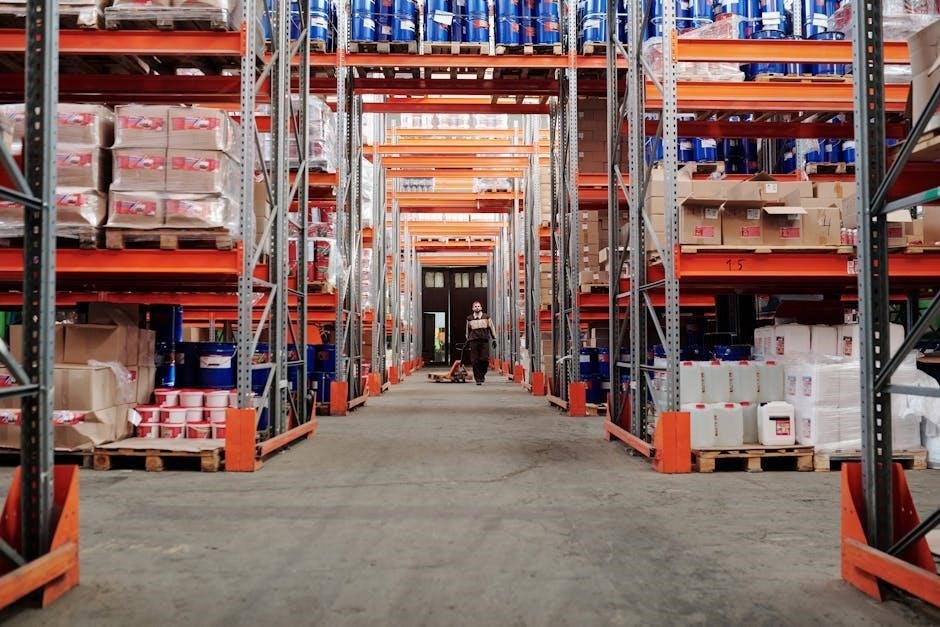
Level 3 signifies a higher level of skill and autonomy, often involving tasks like stock control, customer service leadership, or operating complex equipment. Accurate classification is paramount; misclassification can lead to underpayment or overpayment issues. Employers should carefully assess each role’s duties and responsibilities against the award’s criteria. Resources detailing these classifications are available through the Fair Work Commission and associated pay guides.
Retail Employee Levels – Level 1

Retail Employee Level 1 encompasses entry-level positions typically requiring minimal prior experience and close supervision. These roles generally involve routine tasks such as stocking shelves, operating cash registers under guidance, maintaining store cleanliness, and assisting customers with basic inquiries. Employees at this level are usually undergoing training and developing foundational retail skills.
As of July 1, 2024, the base hourly rate for Level 1 retail employees is $26.55. This rate applies to all hours worked, excluding any applicable penalty rates for weekend, public holiday, or overtime work. Trainee rates may apply for individuals undertaking a formal traineeship. Employers must ensure accurate timekeeping and record-keeping to comply with award requirements. This level represents the starting point for many in the retail industry, offering opportunities for growth and advancement.
Retail Employee Levels – Level 2
Retail Employee Level 2 signifies a progression from entry-level, demanding more experience and a greater degree of independence. Individuals at this level can perform a wider range of tasks, including processing sales transactions with minimal supervision, handling customer complaints, and assisting with visual merchandising. They often provide guidance to Level 1 employees and contribute to team goals.
Effective July 1, 2024, the base hourly rate for Level 2 retail employees is $27.16. This rate reflects the increased skill and responsibility associated with the role. As with Level 1, penalty rates apply for work performed outside standard hours. Employers should verify employee classifications to ensure correct wage payment. Opportunities for skill development and career progression are available, potentially leading to Level 3 positions with further experience and training.
Retail Employee Levels – Level 3
Level 3 Retail Employees represent a high level of skill and experience within the retail environment. These individuals typically possess comprehensive knowledge of store operations, including inventory management, loss prevention, and staff training. They often take on supervisory responsibilities, assisting with scheduling and performance monitoring of junior staff. Problem-solving and independent decision-making are key components of this role.
As of July 1, 2024, the base hourly rate for a Level 3 retail employee is $27.58. This reflects their advanced skillset and increased responsibility. Like other levels, penalty rates apply for work outside standard hours. Employers must accurately classify employees to ensure compliance with the General Retail Industry Award. Continued professional development can lead to opportunities for management positions within the retail sector.
Current Pay Rates – Effective July 1, 2024

The General Retail Industry Award outlines specific pay rates that came into effect on July 1, 2024, and are applicable to the first full pay period commencing on or after this date. These rates are tiered based on employee classification, recognizing varying skill levels and responsibilities within the retail sector. Understanding these rates is crucial for employer compliance and employee rights.
Currently, Level 1 retail employees earn a base rate of $26.55 per hour, while Level 2 employees receive $27.16. Level 3 employees, demonstrating higher skills, are paid $27.58 hourly. Separate pay rates apply to apprentices and trainees, based on their year of training. Employers should consult the official Fair Work Commission resources for detailed information and ensure accurate payroll processing. These rates are subject to future adjustments.
Base Hourly Rates for Retail Employees
The foundation of remuneration within the General Retail Industry Award lies in the established base hourly rates, categorized by retail employee level. As of July 1, 2024, these rates are meticulously defined to reflect skill and responsibility. Level 1 employees, typically undertaking introductory roles, receive a base rate of $26.55 per hour. Progressing to Level 2, employees with demonstrated experience and broader duties earn $27.16 hourly;

Finally, Level 3 employees, showcasing advanced skills and often supervisory responsibilities, are entitled to a base rate of $27.58 per hour. These rates are the standard for ordinary hours worked and form the basis for calculating overtime and penalty rates. Employers must adhere to these rates to ensure fair compensation and legal compliance, referencing official documentation for precise details.
Apprentice and Trainee Pay Rates
Recognizing the developmental nature of apprenticeships and traineeships, the General Retail Industry Award prescribes specific pay rates that increase progressively with experience and completed training milestones. These rates are calculated as a percentage of the applicable base hourly rate for a relevantly skilled adult worker, typically aligning with Level 1, 2, or 3 depending on the training stage.
The percentage increases incrementally throughout the apprenticeship or traineeship, rewarding skill acquisition and contribution. Employers are obligated to meticulously track training progress and adjust pay rates accordingly. Detailed schedules outlining these percentage increases are available within the official Award documentation. Ensuring correct application of these rates is vital for compliance and fostering a supportive learning environment for future retail professionals.

Annualized Salaries and Considerations
The General Retail Industry Award permits the use of annualized salaries, offering flexibility for employers and employees, but requires careful calculation to ensure full compliance with Award provisions. An annualized salary must demonstrably cover all minimum entitlements, including base rates, penalty rates, allowances, and potential overtime.
Employers must maintain detailed records proving the salary adequately compensates for all anticipated work hours and conditions. Regular reviews are crucial, particularly with changes in work patterns or Award updates. Incorrectly calculated annualized salaries can lead to significant back-pay liabilities. Utilizing the Fair Work Ombudsman’s resources and seeking professional advice is highly recommended when establishing or reviewing these arrangements, guaranteeing both fairness and legal adherence.
Penalty Rates and Allowances

The General Retail Industry Award outlines specific penalty rates for work performed outside standard hours, recognizing the disruption to employees’ work-life balance. Saturday work attracts a penalty, while Sunday and Public Holiday rates are significantly higher, compensating for work during non-traditional times.
Beyond penalty rates, various allowances may apply, depending on the nature of the work and employee responsibilities. These can include allowances for specific tasks, locations, or qualifications. Employers must accurately identify and apply all applicable penalty rates and allowances, ensuring employees receive their full entitlements. Detailed record-keeping is essential for demonstrating compliance and avoiding potential underpayment claims. Consult the official Pay Guide for precise rates and allowance details.
Saturday, Sunday, and Public Holiday Rates
The General Retail Industry Award mandates increased pay rates for work conducted on Saturdays, Sundays, and Public Holidays. Saturday rates typically involve a percentage increase on the base hourly rate, acknowledging the impact on weekend leisure time. Sunday work attracts a substantially higher penalty, reflecting the significant disruption to personal commitments.
Public Holiday rates are the most generous, often doubling or even tripling the standard hourly rate. These rates apply to work performed on the public holiday itself. Employees working on these days are entitled to the specified penalty rates, ensuring fair compensation for sacrificing time with family and participating in community events. Employers must meticulously track and apply these rates to avoid underpayment issues and maintain compliance with the Award.
Shift and Overtime Provisions
The General Retail Industry Award outlines specific provisions for shift work and overtime, ensuring fair compensation for extended or irregular hours. Shift workers, those regularly working outside standard business hours, are typically entitled to shift penalties – an additional percentage added to their base hourly rate. These penalties acknowledge the less desirable nature of working evenings, nights, or early mornings.
Overtime provisions come into play when employees work beyond their ordinary hours. The Award specifies the overtime rate, usually time-and-a-half or double-time, depending on the number of overtime hours worked. Accurate record-keeping of hours worked is crucial for calculating overtime payments correctly. Employers must adhere to these provisions to avoid breaches of the Award and potential penalties.
Fair Work Commission Updates & Junior Pay Rates
The Fair Work Commission continually reviews and updates awards, including the General Retail Industry Award, impacting pay rates and conditions. Currently, a significant case is underway concerning junior pay rates within the retail, fast food, and pharmacy sectors. This review has the potential to substantially alter wage costs for employers of younger workers, potentially aligning junior rates more closely with adult rates.
Hearings are actively progressing, with the Shop, Distributive and Allied Employees’ Association (SDA) leading the charge for fairer compensation for young retail employees. The outcome of this case could lead to increased wages for hundreds of thousands of young Australians. Employers should closely monitor updates from the Fair Work Commission to ensure ongoing compliance with any revised junior pay rate structures.
Accessing the Official Pay Guide Documents
Reliable and up-to-date information regarding the General Retail Industry Award is readily available through official channels. The Fair Work Ombudsman provides comprehensive resources, including downloadable pay guides in both DOCX and PDF formats. These guides summarize the current award rates, effective from July 1, 2024, and are updated annually.
Employers and employees can directly access these documents via the Fair Work Ombudsman website. It’s crucial to utilize these official sources to ensure accurate interpretation and application of the award’s provisions. Regularly checking for updates is recommended, as pay rates and conditions are subject to change based on Fair Work Commission decisions. Utilizing the official guides minimizes the risk of non-compliance and promotes fair employment practices.
Resources for Employers and Employees
Numerous resources are available to support both employers and employees navigating the General Retail Industry Award. The Fair Work Ombudsman website is a primary source, offering detailed information, pay rate calculators, and guidance on compliance. Industry associations, such as retail trade organizations, often provide specific advice and support tailored to their members.

For employers, understanding obligations regarding penalty rates, allowances, and annualised salaries is vital. Employees can access information regarding their entitlements, including minimum pay rates based on their classification and age. Legal professionals specializing in employment law can also offer expert advice. Staying informed about Fair Work Commission updates and potential changes to junior pay rates is crucial for all parties involved, ensuring a fair and compliant workplace.
Future Pay Rate Adjustments (2025/2026)
Anticipating future pay rate adjustments is crucial for budgeting and compliance within the General Retail Industry Award. While specific increases for 2025/2026 are not yet finalized, annual adjustments typically occur on July 1st. These adjustments are often linked to the National Wage Case decisions made by the Fair Work Commission, considering factors like inflation and economic growth.
Employers should proactively monitor Fair Work Commission announcements and updates from reliable sources to prepare for potential changes. The ongoing case regarding junior pay rates also introduces uncertainty, potentially impacting wage costs for younger workers. Staying informed and planning accordingly will ensure continued adherence to award requirements and maintain a stable workforce. Regular review of pay rates is highly recommended.

This General Retail Industry Award Pay Guide 2024 is intended as a helpful summary and should not be considered a substitute for professional legal advice. Pay rates and conditions are subject to change based on Fair Work Commission decisions and legislative updates. Employers are responsible for ensuring full compliance with the official award documentation (MA000004).
While we strive for accuracy, we cannot guarantee the information presented is entirely exhaustive or up-to-date at all times. Always refer to the official Fair Work Ombudsman website or consult with an employment law specialist for definitive guidance. Reliance on this guide is at your own risk, and we disclaim any liability for inaccuracies or omissions. This guide is for informational purposes only.