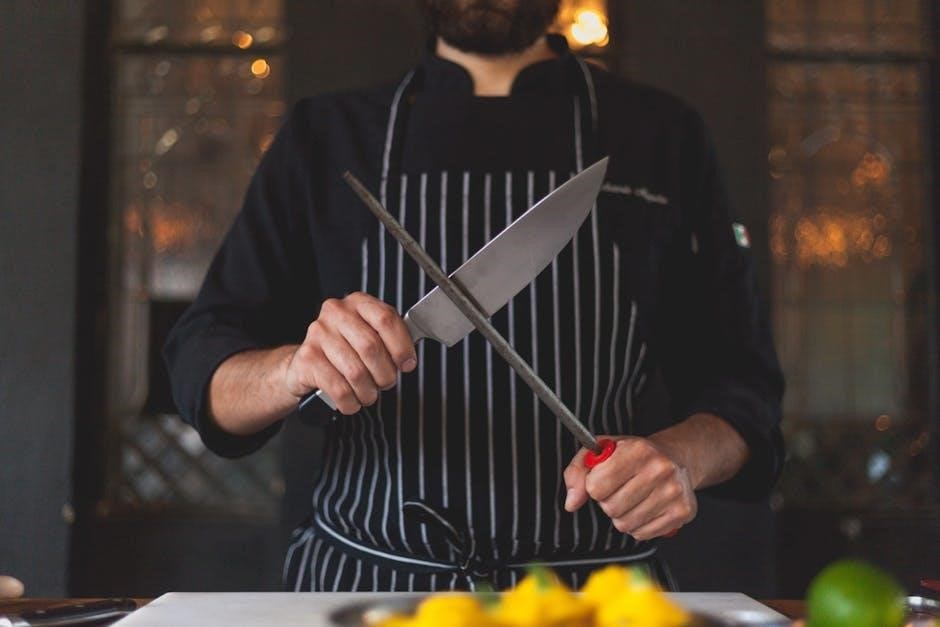
Angle Guide Knife Sharpening: A Comprehensive Plan
Maintaining a sharp knife is crucial for safety and efficiency, and angle guides simplify achieving consistent, professional results.
This guide explores techniques, tools, and troubleshooting for optimal blade care.
Angle-guided sharpening represents a significant advancement in knife maintenance, offering a reliable method for both beginners and experienced users. Unlike freehand sharpening, which demands considerable skill and practice, these guides ensure consistent blade angles.
This consistency is paramount for achieving a truly sharp and durable edge. Whether reviving a cherished pocket knife or maintaining kitchen essentials, angle guides streamline the process. They eliminate guesswork, reducing the risk of damaging your blades and promoting safer, more efficient cutting performance.
II. Why Use an Angle Guide?
Employing an angle guide dramatically simplifies knife sharpening, particularly for those new to the process. Maintaining a consistent angle is the cornerstone of a sharp edge, and guides remove the learning curve associated with freehand methods.
They prevent common errors like rounding the edge or creating an inconsistent bevel. Furthermore, angle guides enhance safety by providing a stable platform and reducing the likelihood of slips. Ultimately, using a guide delivers professional-quality results with less effort, preserving your knives’ longevity and performance.
III. Understanding Knife Angles
Knife angles are critical; they dictate sharpness, edge retention, and the knife’s intended purpose. A smaller angle creates a sharper, but more delicate edge, ideal for slicing. Larger angles produce a more durable, robust edge suited for chopping or heavier tasks.
Understanding these nuances is key to selecting the correct angle for each blade. Consistent angle maintenance is paramount, and angle guides ensure this precision. Incorrect angles lead to poor performance and accelerated wear, diminishing the knife’s overall lifespan.
A. Common Knife Angles & Their Uses
Typically, kitchen knives utilize a 20-degree angle per side, resulting in a 40-degree inclusive angle, offering a balance of sharpness and durability. Japanese knives often feature a 15-degree angle for exceptional sharpness, requiring more frequent honing. Heavy-duty cleavers employ a 25-30 degree angle for robustness.
Pocket knives generally range from 20-25 degrees. Fillet knives benefit from a shallower 15-20 degree angle for clean, precise cuts. Selecting the appropriate angle, aided by an angle guide, maximizes performance and extends blade life.
B. Angle Charts for Different Knife Types
Here’s a guide to optimal angles: Chef’s knives – 20 degrees; Paring knives – 20 degrees; Serrated knives – maintain factory angle (usually 15-20); Fillet knives – 15 degrees; Boning knives – 20 degrees; Cleavers – 25-30 degrees; Japanese knives (Gyuto, Santoku) – 15 degrees; Pocket knives – 20-25 degrees; Tanto blades – 30 degrees.
Using an angle guide ensures consistency. Remember, these are starting points; adjust slightly based on steel hardness and intended use. Referencing a chart during sharpening improves precision and prolongs your knife’s edge.
IV; Types of Angle Guides
Several angle guide options exist. Magnetic angle guides attach to the blade, providing a consistent angle during sharpening. Clip-on guides secure to the knife’s spine, offering stability. Ceramic rod guides are often integrated into sharpening systems, offering precision and control.
Each type caters to different preferences and sharpening setups. Consider the knife shape and your skill level when choosing; Some guides are universal, while others are designed for specific blade profiles.
A. Magnetic Angle Guides
Magnetic angle guides utilize a strong magnet to adhere to the knife blade, establishing and maintaining the desired sharpening angle. These are generally versatile, working with various blade shapes and sizes. They offer a relatively simple setup and are often favored by beginners due to their ease of use.
However, the magnetic hold might not be as secure on all blade types, potentially slipping during aggressive sharpening. Ensure a firm attachment before applying pressure to prevent inaccuracies.
B. Clip-On Angle Guides
Clip-on angle guides physically attach to the knife’s spine, providing a stable reference point for consistent sharpening; These guides typically offer pre-set angles, making them ideal for users seeking precision and repeatability. They are particularly useful for maintaining factory edge angles on kitchen knives.
However, some clip-on guides may not accommodate all blade thicknesses or shapes, potentially limiting their versatility. Proper fit is crucial for accurate angle control and preventing damage to the blade or the guide itself.
C. Ceramic Rod Angle Guides
Ceramic rod angle guides offer a unique approach, utilizing a small ceramic rod held against the blade to establish the sharpening angle. These guides are often favored for their simplicity and portability, making them suitable for both beginners and experienced sharpeners. They work well with various sharpening stones and steels.
Unlike clip-on guides, ceramic rods adapt to different blade shapes, offering greater flexibility. However, maintaining consistent pressure and a steady hand is essential for achieving optimal results with this method.
V. Essential Sharpening Tools
Successful angle-guided sharpening relies on having the right tools. Sharpening stones, available in water and oil varieties, form the foundation, each offering different abrasive qualities. Diamond sharpening plates provide rapid material removal and are excellent for restoring dull edges.
A honing steel is crucial for maintaining sharpness between sharpening sessions, realigning the blade’s edge. Choosing quality tools ensures efficient sharpening and prolongs your knife’s lifespan. Don’t underestimate the importance of proper tool selection!
A. Sharpening Stones (Water Stones vs. Oil Stones)
Sharpening stones are fundamental, differing primarily in their lubricant. Water stones cut faster, creating a slurry that aids in material removal, requiring frequent flattening. Oil stones are slower but self-leveling, needing less maintenance and offering a finer polish.
The choice depends on preference and knife type; water stones excel at restoring edges, while oil stones maintain sharpness. Proper lubrication is vital for both, preventing clogging and ensuring a smooth sharpening process.
B. Diamond Sharpening Plates
Diamond sharpening plates offer a fast and efficient way to sharpen knives, utilizing industrial diamonds bonded to a metal plate. They require no lubrication, making them convenient, and are available in various grits for different sharpening stages.
Diamond plates excel at quickly removing metal and establishing a new edge, but can be more aggressive than traditional stones. Consistent pressure and angle control are crucial to avoid scratches. They are ideal for harder steels.
C. Honing Steels
Honing steels, often mistakenly called sharpeners, don’t actually remove metal. Instead, they realign the blade’s edge, correcting microscopic bends and restoring its cutting ability. Regular honing – even after each use – maintains sharpness between full sharpenings.
Different types exist, including ceramic, diamond-coated, and traditional steel. Proper technique involves drawing the blade along the steel at a consistent angle, maintaining light pressure. Honing is a vital step for preserving a sharp edge.
VI. Setting Up Your Sharpening Station
A stable and well-lit workspace is paramount for safe and effective sharpening. Secure your sharpening stone firmly to prevent movement during use – a non-slip mat is ideal. Ensure adequate lighting to clearly see the blade’s edge and the angle guide.
Minimize distractions and have all necessary tools within easy reach. Consider a comfortable chair and proper posture to avoid fatigue. A dedicated sharpening station promotes consistency and safety throughout the process.
A. Securing the Sharpening Stone
Preventing stone movement is vital for consistent sharpening. Utilize a non-slip mat, rubber feet, or a dedicated stone holder to anchor it firmly. For water stones, soaking beforehand ensures proper lubrication and prevents the stone from skating. Alternatively, a wet towel underneath can provide grip.
Ensure the stone is level to maintain a consistent angle throughout the sharpening process. A stable base minimizes accidents and maximizes control, leading to a sharper, more refined edge.
B. Proper Lighting and Workspace
Adequate illumination is paramount for accurately observing the blade’s angle and the formation of the burr. Direct, bright light, preferably from multiple sources, eliminates shadows and reveals subtle details. A clutter-free workspace allows for smooth, controlled movements without obstruction.
Ensure a stable, flat surface to prevent the sharpening stone from shifting during use. Comfortable posture minimizes fatigue and enhances precision, contributing to a safer and more effective sharpening experience.
VII. The Sharpening Process with an Angle Guide ー Step-by-Step
Begin by securely attaching the angle guide to your knife blade, ensuring it’s firmly in place. Apply gentle, consistent pressure as you draw the blade across the sharpening stone, maintaining the guided angle. Focus on establishing a burr along the entire edge.
Alternate sides with each pass, counting strokes for even wear. Progress through grits, reducing pressure with each refinement. Regularly check for burr formation to gauge progress and adjust technique as needed.
A. Establishing the Correct Angle
Precisely setting the angle is paramount for effective sharpening. Utilize the angle guide’s markings, referencing charts for your specific knife type. Ensure the blade’s edge aligns perfectly with the guide’s surface. Begin with a lower angle for finer blades, increasing it for heavier-duty knives.
Consistent angle maintenance throughout the process is vital. Double-check alignment frequently, especially during initial strokes. A cardboard guide with drawn angles can also assist beginners in visualizing the correct stance.
B. Initial Grinding (Removing Metal)
Initial grinding focuses on reshaping the edge and removing imperfections. Apply moderate, consistent pressure while drawing the blade across the sharpening stone, following the angle guide. Maintain even strokes, covering the entire blade length. This stage requires patience, as significant metal removal may be necessary for dull or damaged knives.
Avoid excessive force, which can lead to uneven grinding. Listen for a consistent sound, indicating proper contact. Regularly inspect the blade for progress, adjusting pressure as needed.
C. Secondary Grinding (Refining the Edge)
Secondary grinding refines the edge created during initial grinding, enhancing sharpness and polish. Switch to a higher grit sharpening stone and reduce pressure significantly. Focus on lighter, more deliberate strokes, maintaining the established angle with the guide. This stage removes burrs and creates a smoother, more refined cutting surface.
Inspect the blade frequently for a consistent, polished edge. Avoid dwelling on any single spot, ensuring even refinement. Patience is key for achieving a truly razor-sharp result.
VIII. Maintaining Consistent Pressure
Consistent pressure is paramount for uniform sharpening. Apply moderate, even force throughout each stroke, letting the weight of your hand guide the blade. Avoid pressing too hard, which can alter the angle or damage the blade. Too little pressure may not effectively remove metal.
Practice developing a feel for the optimal pressure – it should be enough to create a consistent scratch pattern on the stone. Maintaining this consistency ensures a sharp, even edge along the entire blade length.
IX. Recognizing When to Change Grits
Progressing through grits is vital for a refined edge. Begin with a coarser grit to remove significant imperfections and establish the bevel. Transition to medium grits for refining the shape, and finally, to finer grits for polishing.
Look for changes in the scratch pattern on the blade; when scratches from the previous grit disappear, it’s time to move up. Don’t skip grits, as this can prolong the process and yield suboptimal results.
X. Honing After Sharpening
Honing isn’t sharpening; it realigns the blade’s edge, correcting minor distortions that occur during use. Utilize a honing steel regularly – before or after each use – to maintain sharpness between sharpening sessions.
Employ light pressure and a consistent angle, drawing the blade across the steel from heel to tip. Avoid excessive force, which can damage the edge. Regular honing extends the time between full sharpenings, preserving your knife’s performance.
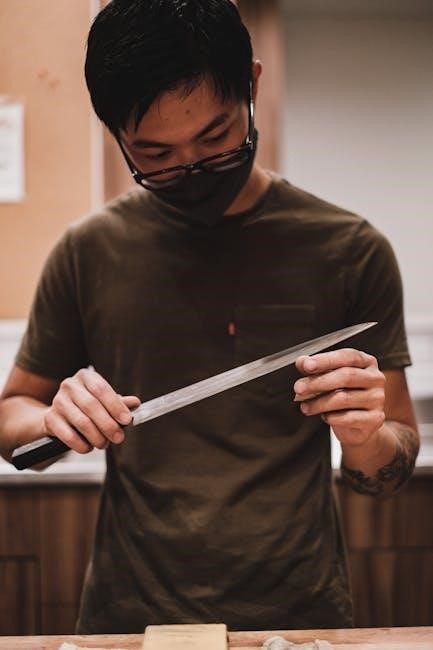
A. The Role of Honing Steel
A honing steel doesn’t remove metal like sharpening stones; instead, it straightens the microscopic teeth along the blade’s edge. Think of it as maintaining, not rebuilding, the edge. Consistent honing prevents the edge from rolling or becoming dull prematurely, extending the life of your sharpening.
Different steels exist – ceramic, diamond-coated, and traditional steel – each offering varying levels of abrasion. Regular use ensures a smoother, more efficient cutting experience, making your knife feel sharper even without actual grinding.
B. Proper Honing Technique
Hold the honing steel vertically with the tip resting on a stable surface. Maintain a consistent 15-20 degree angle – mirroring your sharpening angle – and draw the knife blade down the steel, heel to tip. Apply light pressure, alternating sides with each stroke.
Repeat this motion 5-10 times per side. Avoid sawing motions; focus on a smooth, controlled draw. Wipe the blade clean after honing to remove any metal particles. Practice makes perfect, ensuring a refined and effective technique.
XI. Testing Sharpness
Assess your sharpening success with simple tests. The paper test involves cleanly slicing through a sheet of paper – a sharp knife will glide effortlessly. For a more practical check, the tomato test requires slicing through a ripe tomato without crushing it.
Observe the cut; a sharp knife creates clean slices. If the knife tears or requires excessive force, further sharpening is needed. Remember, consistent testing ensures optimal performance and safety.
A. Paper Test
The paper test is a quick, non-destructive method to evaluate sharpness. Hold a standard sheet of printer paper vertically and carefully attempt to slice downwards with your freshly sharpened knife. A truly sharp blade will glide through the paper cleanly, leaving a smooth, effortless cut without tearing.
If the knife catches, tears, or requires significant pressure, it indicates the edge isn’t yet refined enough. Repeat the process after further honing or sharpening to gauge improvement.
B. Tomato Test
The tomato test provides a practical assessment of a knife’s slicing ability. Select a ripe tomato and attempt to slice through the skin without applying downward pressure. A sharp knife will effortlessly penetrate the skin, creating a clean, smooth slice without crushing the flesh.
If the knife requires force, slips, or tears the tomato, further sharpening is needed. This test reveals how well the blade maintains its edge during a common kitchen task.
XII. Sharpening Serrated Knives with Angle Guides
Sharpening serrated knives presents unique challenges, but angle guides can assist. Utilize a specialized sharpening tool designed for serrations, often a small, tapered stone. Carefully align the guide with each serration, maintaining consistent pressure and angle.
Avoid applying excessive force, as this can damage the delicate teeth. Focus on gently refining each serration, rather than attempting aggressive metal removal. Patience is key to restoring a serrated edge.
XIII. Common Mistakes to Avoid
Several pitfalls can hinder successful sharpening. Incorrect angle selection is a frequent error, leading to a weak or ineffective edge. Excessive pressure can distort the blade and damage the sharpening stone. Rushing the process compromises precision and consistency.
Failing to maintain a consistent angle throughout the stroke is also detrimental. Neglecting to transition through different grits properly results in a coarse finish; Ignoring safety precautions increases the risk of injury.
A. Incorrect Angle
Sharpening at the wrong angle is perhaps the most common mistake. Too shallow an angle creates a delicate edge prone to chipping, while too steep an angle results in a bulky, less efficient edge. Using an angle guide helps, but improper setup defeats its purpose.
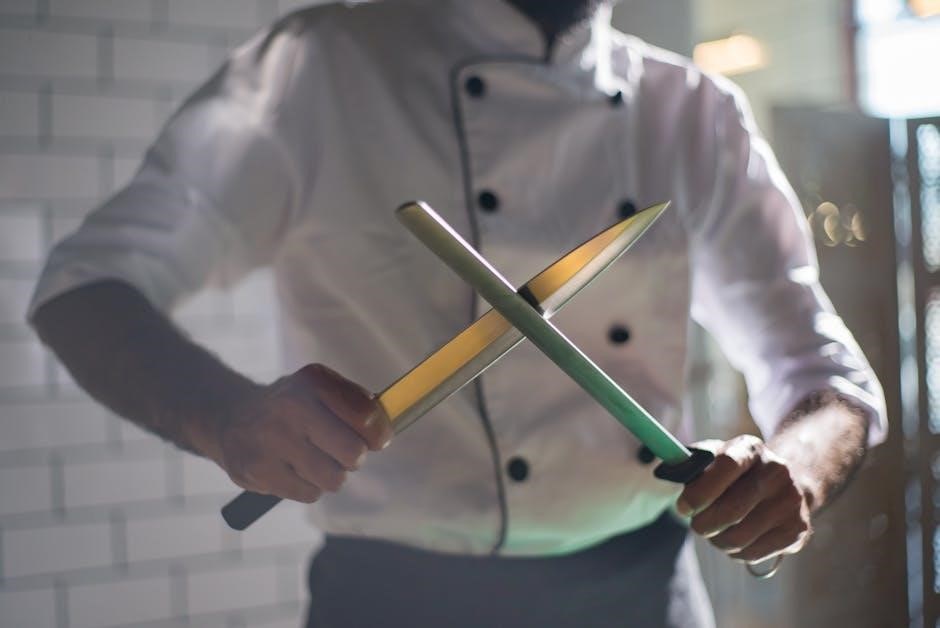
Visualizing the correct angle for your knife type is key. Referencing angle charts ensures accuracy. Consistently maintaining this angle throughout each stroke is vital for a uniform, sharp edge. Incorrect angles lead to poor performance and reduced blade lifespan.
B. Excessive Pressure
Applying too much pressure during sharpening doesn’t enhance the process; it hinders it. Excessive force can distort the blade’s geometry, leading to an uneven or even damaged edge. Let the abrasive material do the work, not your strength.
Gentle, controlled pressure is paramount. Focus on maintaining the correct angle and consistent strokes. Think of guiding the blade, not forcing it. Too much pressure also accelerates stone wear and can cause scratches. A light touch yields superior results.
C. Rushing the Process
Knife sharpening, even with an angle guide, demands patience. Rushing through the steps compromises accuracy and ultimately, sharpness. Each stroke should be deliberate, focusing on maintaining the correct angle and consistent pressure. Skipping grits or reducing stroke counts won’t save time; it will diminish results.
Allow sufficient time for each stage – grinding, refining, and honing. A methodical approach ensures a clean, consistent edge. Resist the urge to speed up; quality takes time. Proper sharpening is an investment in your knives’ longevity and performance.
XIV. Angle Guides for Different Knife Shapes

Standard angle guides excel with straight-edged blades, but adapting to curved or unique shapes requires finesse. For curved blades, focus on maintaining consistent contact along the curve, adjusting pressure as needed. Tanto blades, with their angled point, demand careful alignment to preserve the tip’s geometry.
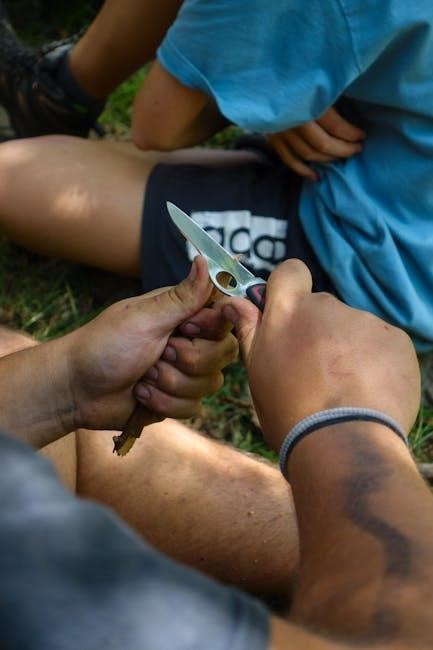
Some guides offer adjustable features to accommodate varying profiles. Alternatively, consider specialized guides designed for specific blade types. Practice is key; experiment to find the optimal technique for each shape, ensuring even sharpening across the entire edge.
A. Curved Blades
Sharpening curved blades with an angle guide presents a unique challenge, as maintaining consistent contact is paramount. Traditional guides may struggle to follow the curvature evenly, leading to uneven sharpening. Employ a rocking motion, gently guiding the blade along the stone while keeping the angle consistent.
Adjust pressure distribution; apply more force to the high points of the curve. Consider flexible angle guides that can conform to the blade’s shape. Regular checks are vital to ensure the entire edge receives equal attention, achieving a uniformly sharp result.
B. Tanto Blades
Tanto blades, with their distinctive angled point, require specialized sharpening techniques when using an angle guide; The primary edge typically needs a lower angle than the secondary bevel. Carefully position the guide to address each facet individually, ensuring accurate angle maintenance.
Focus on establishing a clean break between the two angles. Avoid rounding the point during sharpening; maintain its sharp, defined shape. Utilize a smaller sharpening stone or a dedicated tanto sharpening guide for optimal control and precision, resulting in a functional and aesthetically pleasing edge.
XV. Cleaning and Maintaining Your Angle Guide
Regular cleaning is vital for your angle guide’s longevity and accuracy. After each use, remove any metal filings or abrasive residue with a soft brush or cloth. Avoid harsh chemicals or solvents, as they can damage the guide’s surface.
For magnetic guides, ensure the magnet remains free of debris. Inspect clip-on guides for any signs of wear or looseness, tightening screws as needed. Proper storage in a dry place will prevent rust and maintain optimal performance, ensuring consistent sharpening results.
XVI. Angle Guides vs; Freehand Sharpening
Angle guides offer consistency, especially for beginners, eliminating the learning curve of maintaining a precise angle freehand. However, freehand sharpening provides greater flexibility for curved blades and intricate profiles.
Guides excel in speed and repeatability, while freehand allows for nuanced control and a deeper understanding of the sharpening process. Ultimately, the best method depends on skill level, knife type, and desired level of precision. Both achieve sharpness with practice and dedication.
A. Pros and Cons of Each Method
Angle guides boast simplicity and consistent angles, ideal for beginners and repetitive tasks. However, they can be restrictive with unusual blade shapes and may hinder developing tactile sharpening skills.
Freehand sharpening offers ultimate control and adaptability, allowing for customized edge geometry. Conversely, it demands significant practice to master consistent angles and avoid uneven sharpening. It’s a slower process, but fosters a deeper connection with the blade and honing technique.
XVII. Best Angle Guides on the Market (Current Recommendations)
For versatility, the Lansky Deluxe Sharpening System consistently receives high praise, offering a wide range of angles and stone options. The Work Sharp Precision Adjust Knife Sharpener is lauded for its ease of use and speed, particularly for straight blades.
Budget-conscious users often recommend the Smith’s Adjustable Angle Knife Sharpener. However, consider the Spyderco Sharpmaker for a premium, all-in-one solution, though it requires a steeper learning curve. Research current reviews for the latest models!
XVIII. Sharpening Pocket Knives with Angle Guides
Pocket knives often have varying blade shapes and access points, making angle guides particularly useful. Utilize a clip-on guide for stability, ensuring it securely grips the blade. Smaller sharpening stones are ideal for maneuvering around the pivot point.
Pay close attention to the angle, typically between 20-30 degrees, depending on the knife’s intended use. Consistent pressure and slow, deliberate strokes are key to avoiding damage. Remember to sharpen both sides equally for a balanced edge.
XIX. Sharpening Kitchen Knives with Angle Guides
Kitchen knives benefit greatly from angle guides, ensuring a consistent edge for precise cutting. Most Western-style kitchen knives require a 20-degree angle, while Asian knives often use 15 degrees. Magnetic or clip-on guides work well, providing stability during sharpening.
Longer blades require more passes, maintaining consistent pressure and angle throughout. Water stones are popular for kitchen knives, minimizing heat buildup. Always finish with honing to refine the edge and maintain sharpness between sharpenings.
XX. Troubleshooting Sharpening Problems
Edge rolling indicates an inconsistent angle or excessive pressure; readjust the guide and lighten your touch. Scratches on the blade often result from using a coarse grit or contaminated sharpening stones – clean the stone and switch to a finer grit.
If the edge isn’t sharpening, ensure the angle guide is securely attached and you’re maintaining consistent contact. Remember, rushing the process leads to errors; patience is key for a razor-sharp result. Inspect your work frequently!

A. Edge Rolling
Edge rolling, where the blade’s edge curls over, signifies an inconsistent sharpening angle or applying too much pressure during the grinding process. Using an angle guide correctly minimizes this, but ensure it’s firmly secured. If rolling occurs, reduce pressure and refocus on maintaining the precise angle.
Correcting rolled edges requires returning to a coarser grit to re-establish the apex, followed by careful refinement. Consistent, light strokes are vital to prevent further damage and achieve a clean, sharp edge. Patience is key!
B. Scratches on the Blade
Scratches appearing on the blade during sharpening usually stem from using contaminated sharpening stones or employing overly aggressive grit transitions. Ensure your stones are clean and regularly flushed with water or oil, depending on the type. Progress through grits gradually, avoiding large jumps that can cause visible scratches.
Minor scratches can often be polished out with finer grits and increased sharpening strokes. However, deep scratches may require professional polishing to restore the blade’s finish. Prevention through proper technique is always preferable.
XXI. Advanced Sharpening Techniques (Using Angle Guides)
Beyond basic sharpening, advanced techniques refine edges further. Consider utilizing the “walk the stone” method, subtly altering pressure distribution along the blade for uniform sharpening. Experiment with different stone pressures; lighter pressure creates a refined edge, while heavier pressure accelerates metal removal.
For exceptional sharpness, explore compound polishing with angle guides, applying micro-abrasives to the stone. Mastering these nuances, combined with consistent angle maintenance, unlocks truly razor-sharp results and extends blade life.
XXII. Safety Precautions When Sharpening
Prioritize safety during knife sharpening. Always use a stable, non-slip surface and secure your sharpening stone. Wear cut-resistant gloves to protect your hands from accidental slips. Maintain focus and avoid distractions while sharpening, as a momentary lapse can lead to injury.
Never apply excessive force, which increases the risk of losing control. Properly dispose of metal filings and cleaning materials. Store knives securely after sharpening to prevent accidental cuts.
XXIII. Resources for Further Learning
Expand your knowledge with online forums dedicated to knife sharpening, offering tips and troubleshooting advice from experienced enthusiasts. Explore YouTube channels showcasing various sharpening techniques and angle guide demonstrations. Consider online courses providing structured learning paths for mastering blade maintenance.
Consult reputable knife retailers for workshops or personalized guidance. Read specialized books detailing sharpening theory and practical application. Utilize manufacturer websites for specific angle recommendations for their knives.
XXIV. Conclusion: Achieving a Razor-Sharp Edge
Mastering angle-guided knife sharpening empowers you to maintain peak blade performance, enhancing both safety and culinary precision. Consistent practice, coupled with understanding your knives’ specific angles, unlocks a truly razor-sharp edge. Embrace the process, experiment with tools, and refine your technique.
Remember, a sharp knife is a safer knife, and a well-maintained blade elevates your overall experience. Invest time in learning, and enjoy the rewarding feeling of a perfectly honed edge!